

Welcome to the Foundation of Mobility
Most professionals invest a significant amount of money into a high quality ergonomic chair. However, they often overlook the small components that actually connect that chair to the ground.
Learning how to choose the best office chair casters is vital for your comfort. These small wheels determine how easily you move and how well your floor is protected.
Standard wheels provided by manufacturers are often made of cheap, hard plastic. These components can cause permanent damage to delicate surfaces like hardwood or laminate over time.
Upgrading your hardware is one of the most cost effective ways to improve your daily workflow. It allows for smoother transitions and reduces the physical strain required to shift your position.
This guide will walk you through every technical detail needed to make an informed decision. We will explore materials, stem sizes, and the physics of rolling resistance.
Understanding Stem Sizes and Measurements
Before you purchase any replacements, you must identify the correct stem size for your specific chair. The stem is the metal pin that inserts into the base of the furniture.
The most common size in the industry is the grip ring stem. This standard usually measures eleven millimeters in diameter and twenty two millimeters in length.
Most major brands utilize this universal standard for their seating products. It allows for easy swapping between different types of aftermarket wheels.
However, some brands like Ikea use a smaller ten millimeter stem. Always measure your existing hardware with a digital caliper to ensure a perfect fit.
You can also use a simple wrench or a drill bit as a gauge. If an eleven millimeter bit fits snugly in the hole, you have found your size.
Threaded Stems and Specialized Fittings
Some heavy duty chairs or vintage models use threaded stems instead of push in pins. These require you to screw the wheel directly into the base socket.
Threaded stems come in various diameters and thread pitches. You must verify if your chair uses metric or imperial measurements for these specific parts.
Standard imperial sizes often include three eighths of an inch or five sixteenths of an inch. Metric versions typically range from eight to ten millimeters.
Replacing a threaded caster is slightly more complex than a snap in version. You may need a thin wrench to tighten the nut against the chair base.
If you are unsure about your stem type, remove one wheel and take it to a hardware store. This remains the most reliable way to confirm the dimensions.
Material Science for Floor Protection
The material of the wheel is the most important factor for protecting your investment. Hard materials work best on soft surfaces, while soft materials are essential for hard floors.
Standard nylon wheels are incredibly durable but they lack flexibility. On a hard surface, they can trap grit and scratch your expensive flooring quite easily.
If you work on hardwood, tile, or vinyl, you should look for polyurethane wheels. Polyurethane provides a soft grip that prevents slipping while remaining silent during movement.
These soft wheels act like a cushion between the chair and the ground. They absorb vibrations and prevent the grinding noise common with plastic components.
Thermoplastic rubber is another excellent option for those seeking maximum floor protection. It offers a gummy texture that provides excellent traction on smooth surfaces.
Nylon Wheels for Carpeted Surfaces
Carpet creates a significant amount of friction for any rolling object. To overcome this resistance, you need a harder wheel material like reinforced nylon.
Soft wheels tend to sink into the carpet fibers and become difficult to turn. This increases the physical effort required to move your chair throughout the day.
Dual wheel casters are the traditional choice for high pile or medium pile carpeting. The two wheels distribute the weight over a larger surface area to prevent snagging.
If your carpet is particularly thick, consider a larger wheel diameter. Wheels with a three inch diameter roll much better over thick rugs than two inch versions.
Using a plastic chair mat can also help if you prefer to keep your original wheels. However, high quality carpet casters often eliminate the need for a bulky mat.
Comparing Twin Wheel and Rollerblade Designs
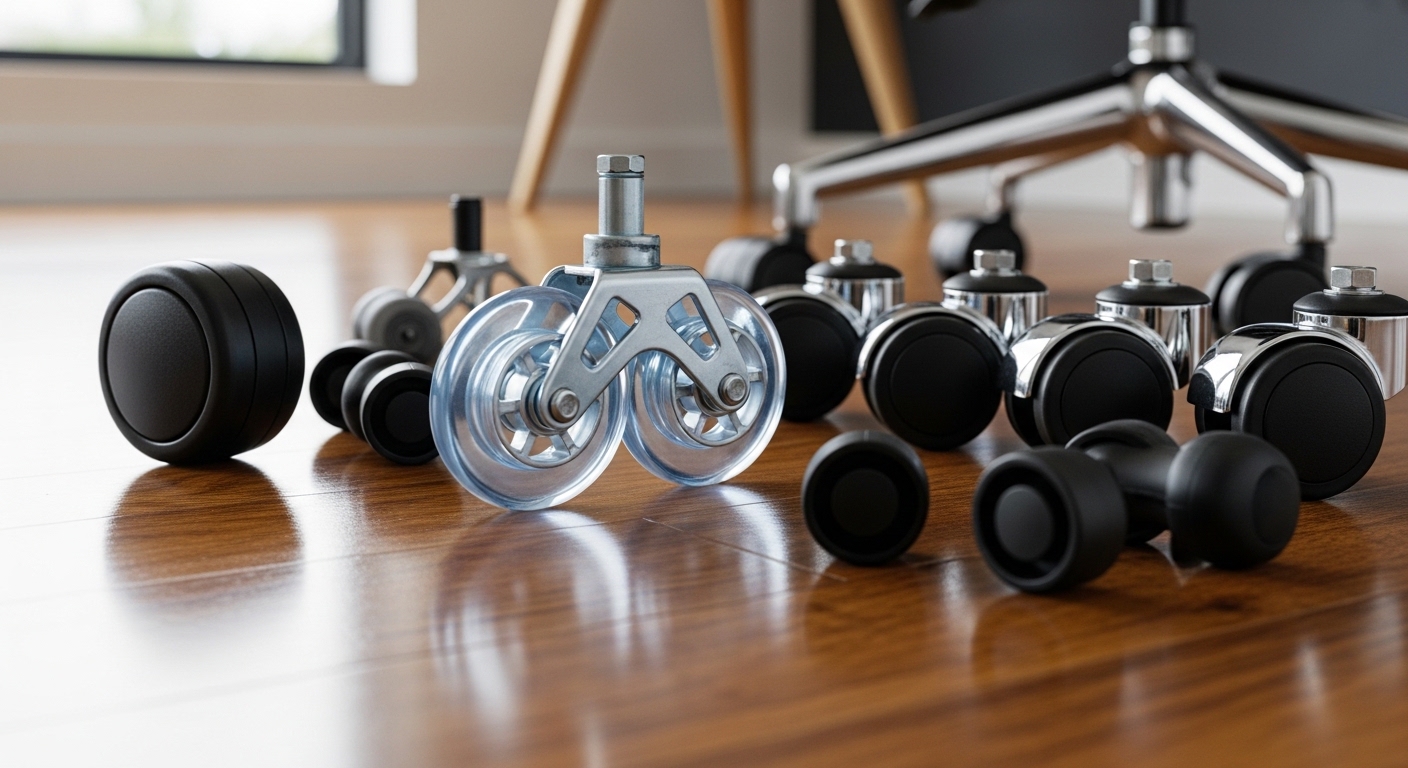
Modern consumers generally choose between two primary aesthetic and functional styles. These are the traditional twin wheel design and the modern rollerblade style wheels for chairs.
Twin wheel casters feature two separate wheels joined by a central axle and a plastic hood. This design provides excellent stability and weight distribution for standard office use.
The hooded design helps protect the axle from dust and hair. However, cheap twin wheels often use plastic bushings instead of metal ball bearings.
Rollerblade style casters have gained massive popularity in recent years. They feature a single, tall wheel made of clear or solid polyurethane with high grade bearings.
These wheels offer a much smoother glide and a more modern appearance. They are particularly effective at rolling over small obstacles like power cables or rug edges.
Pros and Cons of the Rollerblade Style
One major benefit of the single wheel design is the reduction in noise during movement. The high quality bearings allow the chair to glide silently across the room.
They also raise the total height of the chair by about an inch. This can be a benefit for tall users but may cause issues for petite individuals.
A potential downside is that single wheels can feel almost too slippery on some surfaces. You might find your chair drifting away if your floor is not perfectly level.
Furthermore, these wheels can sometimes struggle with swivel movements in very tight spaces. The larger turning radius requires slightly more clearance than twin wheel models.
For most home office users, the benefits of smoothness and floor protection outweigh these minor concerns. They represent a significant upgrade over factory standard equipment.
Weight Capacity and Load Ratings
Every set of wheels has a specific weight limit that you must respect. Exceeding this limit can lead to structural failure of the casters or the chair base.
Standard consumer grade wheels are usually rated for about three hundred pounds per set. This is sufficient for the average user and a standard ergonomic chair.
If you are using a heavy duty chair or if you are a larger individual, look for reinforced models. Some heavy duty sets can support up to one thousand pounds total.
Heavy duty wheels often feature steel internal components and thicker axles. This prevents the wheels from bowing or cracking under sustained pressure over time.
Always check the weight rating per wheel rather than just the total set. Most sets include five wheels, so you can multiply the individual rating by five.
Ergonomics and Rolling Resistance
The physics of how your chair moves has a direct impact on your body. High rolling resistance forces you to use your lower back and legs to move.
Over a long workday, these micro movements add up to significant physical fatigue. A chair that glides effortlessly reduces the strain on your joints and muscles.
Ball bearings play a crucial role in reducing this resistance within the caster assembly. Look for wheels that feature stainless steel precision bearings for the best results.
The swivel mechanism should also rotate freely without any sticking or clicking. This allows the chair to change direction instantly as you reach for different parts of your desk.
In the year 2026, many experts suggest that smooth mobility is a key pillar of ergonomic health. It encourages active sitting and frequent posture changes throughout the day.
Installation and Long Term Maintenance
Installing new wheels is a simple task that requires no professional tools. Simply flip your chair over and pull the old wheels out of the base sockets.
Sometimes the old stem might be stuck due to dirt or rust. A pair of pliers and a bit of lubricant like WD40 can help release the old hardware.
Push the new stems into the holes until you hear or feel a click. This click indicates that the grip ring has expanded to lock the wheel in place.
Maintenance is equally important for keeping your chair moving smoothly over time. Hair and dust are the primary enemies of high performance caster wheels.
Periodically check the axles for tangled hair or carpet fibers that can bind the mechanism. You can use a small pair of scissors to cut away any debris.
Cleaning and Lubrication Tips
Clean the surface of the wheels with a damp cloth every few months. This prevents the buildup of grime and floor wax that causes slipping or streaking.
If the wheels begin to squeak, a small drop of silicone based lubricant on the bearings usually solves the problem. Avoid using heavy oils that attract more dust and dirt.
Check the tightness of the stems if you have the threaded variety. Constant movement can sometimes cause the nuts to loosen over several months of use.
Inspect the polyurethane coating for any signs of cracking or peeling. If the material starts to degrade, replace the wheels immediately to avoid damaging your floor.
Proper care ensures that your chair remains a silent and efficient tool for your productivity. It is a small investment of time for a massive gain in comfort.
Budget Considerations and Value
Price points for replacement wheels vary significantly based on materials and build quality. You can find basic sets for a very low price at many retailers.
However, spending a bit more on premium polyurethane casters is usually worth the cost. Better materials last longer and provide a much superior user experience.
Mid range options usually offer the best balance of durability and floor protection. They often feature better bearings than the cheapest alternatives on the market.
High end models may include luxury finishes like chrome or custom colors. While these look great, ensure the functional specifications meet your actual flooring needs.
Consider the cost of your flooring when deciding how much to spend on wheels. Replacing a set of wheels is much cheaper than refinishing a hardwood floor.
Conclusion
Your choice of hardware impacts every minute you spend at your desk. Understanding how to choose the best office chair casters empowers you to customize your workspace.
Prioritize stem compatibility first to ensure the wheels actually fit your chair base. Then, select the material that matches your specific flooring type for maximum protection.
Whether you choose the sleek look of rollerblade wheels or the stability of twin wheels, focus on quality bearings. This ensures a silent and smooth experience for years to come.
Take the time to measure your current setup and evaluate your movement needs today. A small change underneath your chair can lead to a big improvement in your daily productivity.