
Building the Foundation of Your Network
Creating a home lab is a journey of discovery and technical growth. The heart of this environment is not just the servers, but the equipment that connects them together.
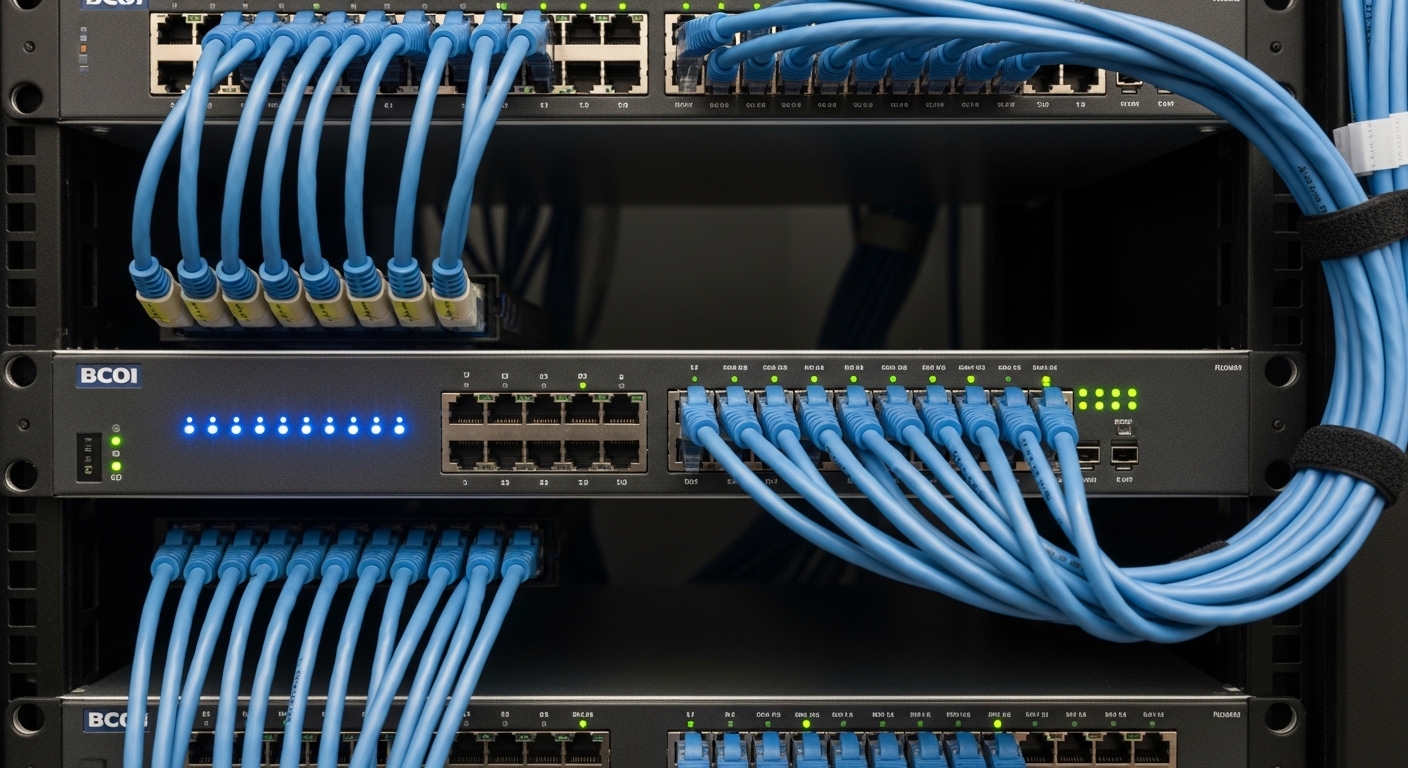
Understanding how to choose managed switches for home lab builds is essential for anyone wanting to move beyond basic connectivity. A standard router simply cannot provide the control required for complex virtualization or security testing.
Managed switches allow you to dictate exactly how data flows between your devices. They offer features that keep your lab traffic separate from your household streaming and gaming.
In this guide, we will explore the critical criteria for selecting the right hardware. We will focus on performance, management capabilities, and the practicalities of operating hardware in a residential setting.
By the end of this article, you will have a clear roadmap for your purchase. You will know which features matter most for your specific learning goals.
Defining the Managed Switch Advantage
An unmanaged switch is a simple plug and play device that forwards traffic without intervention. It lacks an interface and offers no visibility into what is happening on your network.
A managed switch provides a dedicated operating system for network configuration. This allows you to monitor port status and configure advanced protocols.
The primary benefit of a managed device is the ability to create virtual local area networks. These segments allow you to isolate vulnerable test machines from your primary personal data.
You can also implement quality of service rules to prioritize specific types of traffic. This ensures that your storage backups do not interrupt your video calls or gaming sessions.
Management interfaces come in several varieties, including web based portals and professional command line interfaces. Choosing the right style depends on your current skill level and your career goals.
Exploring Layer 2 vs Layer 3 Functionality
Most entry level managed switches operate at Layer 2 of the OSI model. They move data based on MAC addresses and handle basic VLAN tagging with ease.
Layer 3 switches are more advanced because they can perform routing functions internally. They can route traffic between different subnets without sending it back to your main router.
This offloading can significantly improve the inter VLAN routing performance of your entire home lab. It reduces the load on your firewall and minimizes potential bottlenecks.
However, Layer 3 switches are often more expensive and generate more heat. They are best suited for labs with many subnets and high internal traffic demands.
Determining Your Port Density Requirements
Before you buy, you must count the number of devices you plan to connect. This includes servers, desktop PCs, wireless access points, and storage arrays.
It is always wise to choose a switch with more ports than you currently need. A 24 port model is often the sweet spot for a growing home lab environment.
Small labs might survive on 8 or 16 ports, but these can fill up quickly. Remember that each physical server might require multiple connections for management and data.
If you plan to use a cluster of servers, you will need ports for heartbeat traffic and migration tasks. This can easily consume four or five ports per physical machine.
Consider the physical layout of your office or lab space when choosing port counts. A single large switch is often easier to manage than three smaller ones linked together.
Choosing the Right Link Speeds
Gigabit ethernet is the standard for most home lab applications today. It provides sufficient bandwidth for general web services and most virtualization tasks.
However, the rise of multi gigabit networking is changing the landscape for power users. Switches with 2.5GbE ports are becoming more affordable for modern motherboards.
If you are working with high speed storage like NVMe arrays, you should look for 10GbE options. These are often provided via SFP plus ports rather than traditional copper jacks.
10GbE links allow for lightning fast backups and virtual machine migrations. This is particularly useful if you run a dedicated storage server like TrueNAS or Unraid.
Understanding Power over Ethernet Needs
Power over Ethernet, or PoE, allows you to send electricity over the same cable used for data. This is incredibly convenient for mounting hardware in places without power outlets.
Common uses for PoE in a home lab include wireless access points and IP cameras. You might also use it for small PoE powered switches located at your desk.
There are different standards for PoE that you must understand before buying. 802.3af provides basic power, while 802.3at offers higher wattage for modern devices.
The latest 802.3bt standard can power even more demanding equipment like high end pan tilt zoom cameras. Check the requirements of your devices before selecting a switch.
Always verify the total power budget of the switch you are considering. A switch might have 24 ports, but it might only have enough power to run 8 high draw devices.
Managing Heat and Noise from PoE
PoE functionality requires internal power supplies that can generate significant heat. To keep these components cool, manufacturers often use high RPM fans.
In a home office, the fan noise from a large PoE switch can be very distracting. You should look for models that are marketed as silent or fanless if noise is a concern.
Some managed switches allow you to control fan speeds based on the internal temperature. This can help keep the noise down during the evening when the lab is idle.
If you do not need to power many devices, a non PoE switch will be much quieter. You can always use individual PoE injectors for the one or two devices that require power.
Critical Software Features for Learning
The software inside the switch is what makes it managed. You want a feature set that aligns with your professional development goals.
Look for switches that support Link Aggregation Control Protocol, also known as LACP. This allows you to combine multiple physical ports into one logical high speed link.
Port mirroring is another essential feature for home lab enthusiasts. It allows you to send a copy of all network traffic to a specific port for analysis.
This is vital if you want to learn how to use security tools like Wireshark or Zeek. Without port mirroring, you cannot easily inspect the traffic flowing between other devices.
Spanning Tree Protocol is also a must have for preventing network loops. This ensures that your network remains stable even if you accidentally plug a cable in incorrectly.
Command Line vs Web Management
Web interfaces are excellent for beginners because they provide a visual overview of the settings. They allow you to click through menus to configure VLANs and port settings.
However, professionals often prefer a command line interface for speed and automation. Learning the CLI of a major vendor can be a great boost for your resume.
Some switches offer both, giving you the flexibility to choose based on the task. Simple tasks can be done in the browser, while complex scripts can be run via SSH.
Cloud managed switches are another option, allowing you to change settings from a mobile app. This is convenient, but some users prefer to keep their management entirely local for privacy.
Form Factor and Physical Installation
Managed switches generally come in two physical styles. Desktop models are compact and fit easily on a shelf or desk surface.
Rack mount models are wider and designed to be bolted into a standard 19 inch server rack. These are the industry standard for organized home labs.
If you plan to build a rack, ensure your switch comes with the necessary mounting ears. Some smaller switches are rack mountable but require a special kit that is sold separately.
Depth is another consideration for home users. Many enterprise switches are very deep and may not fit in shallow wall mounted racks.
Check the dimensions carefully to ensure the switch will fit in your chosen enclosure. You also need to leave space at the front and back for cable management and airflow.
Thermal Management and Airflow Direction
Enterprise grade switches are often designed for front to back airflow. This works perfectly in a data center but can be tricky in a small closet or under a desk.
Make sure your switch has enough clearance for cooling to prevent overheating. Overheated switches can lead to dropped packets and hardware failure over time.
If you are placing the switch in a living area, look for side to side airflow models. These are often quieter and easier to cool in open air environments.
Monitoring the internal temperature sensors through the management interface is a good practice. This helps you identify if your lab setup needs better ventilation or dedicated fans.
Budget Considerations and the Used Market
New managed switches from reputable brands can be quite expensive. For many, the cost of a brand new 24 port 10GbE switch is simply too high.
The used enterprise market is a gold mine for home lab builders. Companies often retire perfectly functional gear after only a few years of service.
You can find high quality switches from big names at a fraction of their original price. This allows you to learn on the same hardware used in real corporate environments.
Be aware of the potential downsides of buying used gear. Older enterprise switches can be very power hungry, adding significantly to your monthly electricity bill.
They also rarely come with a warranty. If a used switch fails, you will likely have to buy a replacement out of your own pocket.
Licensing and Firmware Updates
One major pitfall of used enterprise gear is software licensing. Some brands require an active subscription to access the latest firmware updates or advanced features.
Without these updates, your switch could be vulnerable to security exploits. Research the vendor policies before committing to a specific used model.
Look for brands that offer free lifetime updates for their hardware. This ensures that your lab remains secure and functional for many years to come.
Some vendors also offer community versions of their software. This can be a great way to access professional features without paying for an enterprise license.
Future Proofing Your Lab Investment
Technology moves fast, and what seems fast today may be slow by 2026. Investing in SFP plus ports is one of the best ways to future proof your setup.
These ports allow you to use either copper or fiber optic modules. This gives you the flexibility to upgrade your speeds as your needs evolve.
Consider whether you will need support for modern protocols like IPv6. Most modern managed switches handle this well, but older used gear might struggle.
Energy efficiency is another aspect of future proofing. Newer switches use less power and generate less heat, making them cheaper to run over several years.
Think about the growth of your lab over the next three to five years. Buying a switch that can handle that growth will save you money in the long run.
The Role of Stackable Switches
If you anticipate needing a massive number of ports, look into stackable switches. These allow you to connect multiple units and manage them as a single logical device.
Stacking provides high availability and simplifies the management of complex configurations. It is a more advanced feature usually found in mid range to high end models.
For most home labs, stacking is not strictly necessary. However, it is a great technology to learn if you are pursuing a career in network administration.
Check if the switch uses dedicated stacking ports or standard ethernet ports for this purpose. Dedicated stacking cables are often proprietary and can be expensive to source.
Pros and Cons of Different Managed Switch Types
Smart managed switches offer a middle ground for many users. They provide the most common features like VLANs through a simple web interface.
The main disadvantage is that they often lack a full command line or advanced security features. They are great for home use but might limit your learning potential.
Fully managed enterprise switches offer every feature imaginable. They provide deep control over every aspect of the network hardware and software.
The downside is the steep learning curve and the potential for higher noise and heat. These are best for dedicated lab spaces where performance is the priority.
Cloud managed switches provide ease of use and remote access. They are perfect for users who want to manage their network from anywhere in the world.
However, they often require a permanent internet connection to change settings. If the vendor’s cloud service goes down, you might lose the ability to manage your hardware.
Final Thoughts on Choosing Your Switch
Selecting the right hardware is a balance between your budget, your noise tolerance, and your learning objectives. There is no single perfect choice for everyone.
Focus on the core features like VLAN support and port density first. These will have the biggest impact on your daily lab operations and security.
Do not be afraid to start with a smaller, quieter switch as you learn the ropes. You can always add more powerful enterprise gear as your knowledge and needs expand.
Documenting your network configuration is just as important as the hardware itself. Keep track of your VLAN IDs and port assignments to avoid confusion later.
Your home lab is a place for experimentation and occasional failure. Choosing a switch that allows you to recover quickly from mistakes is a wise move.
We hope this guide has helped you understand how to choose managed switches for home lab environments. Take your time to research and find the piece of equipment that fits your goals.
A well chosen switch will serve as the reliable backbone of your lab for years. It will enable you to explore the vast world of networking with confidence and control.