

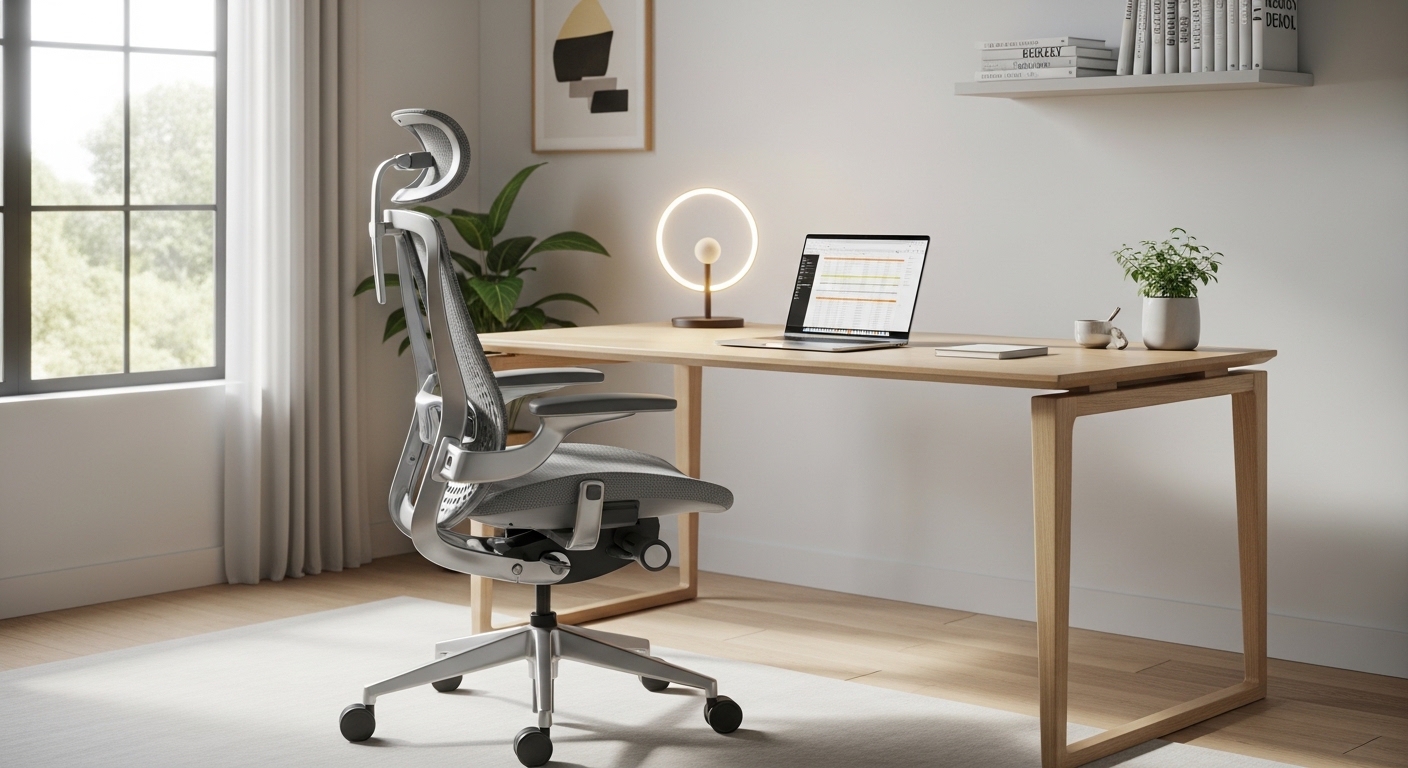
Finding the right office furniture is often a struggle for individuals with smaller frames. Most standard chairs are designed to fit the average proportions of a much larger demographic.
When you are shorter than five feet four inches, a typical chair can feel like a throne that swallowed you whole. This lack of proper fit leads to significant physical discomfort over time.
In this guide, we will explore exactly how to choose ergonomic chairs for petite users to ensure long term health. Proper ergonomics are not just about comfort but about preventing chronic pain and injury.
The Home Office Lab focuses on precision when it comes to your workspace setup. A chair that fits correctly will enhance your productivity and focus throughout the day.
The Importance of Seat Depth for Petite Users
Seat depth is perhaps the most critical factor for shorter individuals. If the seat pan is too long, you will not be able to reach the backrest comfortably.
This situation often forces the user to sit at the edge of the chair. Sitting on the edge removes all lumbar support and places immense pressure on the thighs.
A properly fitted chair should allow you to sit all the way back. You should still have a small gap between the edge of the seat and the back of your knees.
This gap is often referred to as the two finger or three finger rule. For petite users, a seat depth of sixteen inches or less is usually ideal.
Many high quality chairs include a seat slider function. This feature allows you to adjust the depth to match your specific leg length perfectly.
Without this adjustment, a seat that is too deep can restrict blood flow to your lower legs. This can lead to numbness or swelling after several hours of work.
Finding the Correct Minimum Seat Height
Most standard office chairs have a minimum height that is simply too high for shorter legs. When your feet dangle, it places strain on your lower back and hips.
Your feet must be firmly planted on the ground to distribute your weight evenly. This alignment is fundamental for spinal health and comfort.
When learning how to choose ergonomic chairs for petite users, check the lowest height setting carefully. Look for a chair that can drop to fifteen inches from the floor.
Standard gas cylinders often bottom out at eighteen inches. This height is frequently too tall for those under five feet three inches.
If you find a chair you love that is too tall, you might consider a smaller gas lift. Some manufacturers offer short cylinders specifically for petite customers.
Using a footrest is a common workaround for tall chairs. However, a chair that fits your height naturally is always the superior ergonomic choice.
Evaluating Lumbar Support Placement
Lumbar support must align with the natural curve of your lower spine. In standard chairs, this curve is often positioned too high for petite backs.
When the support hits your mid back instead of the lumbar region, it causes slouching. Slouching leads to muscle fatigue and long term postural issues.
Look for chairs that offer height adjustable lumbar systems. This allows you to manually position the support exactly where you need it.
Some chairs use a flexible backrest that contours to the user. Ensure the tension is adjustable so it does not push you forward too aggressively.
The depth of the lumbar curve also matters. Smaller individuals often prefer a subtle curve rather than a very pronounced protrusion.
Test the feel of the backrest while wearing your typical work clothes. A support system that feels firm but cushioned is generally the best for all day use.
Armrest Width and Adjustability Factors
Armrests are frequently overlooked when users evaluate chair sizes. In many models, the armrests are set too far apart for narrow shoulders.
If you have to splay your arms outward to reach them, you create tension in your neck. This tension often results in tension headaches by the end of the day.
Seek out chairs with 4D armrests. These allow for adjustments in height, width, depth, and pivot angle.
Width adjustment is especially vital for the petite user. You want the armrests to sit directly under your elbows while your arms are at your sides.
Properly positioned armrests take the weight off your shoulders. This weight distribution is key to preventing rotator cuff issues and upper back pain.
The material of the armrest should be soft enough to prevent pressure points. However, it should be durable enough to maintain its shape over years of use.
Backrest Height and Headrest Considerations
The height of the backrest should correspond to the length of your torso. A backrest that is too tall might interfere with your head or neck movement.
Many petite users find that high back chairs push their head forward uncomfortably. This is usually due to the integrated headrest being positioned for a taller person.
If you prefer a headrest, ensure it has a wide range of vertical movement. It should cradle the base of your skull, not the top of your head.
Mid back chairs are often a fantastic choice for smaller individuals. They provide ample support without the bulk of a full height backrest.
A shorter backrest allows for better shoulder mobility. This is particularly helpful if your work involves reaching for items or typing extensively.
Check if the backrest can tilt and lock in various positions. Flexibility in movement encourages active sitting, which is better for your circulation.
Pros and Cons of Mesh Chair Designs
Mesh chairs are incredibly popular for their breathability and modern aesthetic. They offer excellent temperature regulation during long work sessions.
For petite users, mesh provides a supportive, floating sensation. The material contours to your shape without the need for thick foam padding.
- Pros: Excellent airflow keeps you cool.
- Pros: Distributed pressure prevents hot spots.
- Cons: Some mesh can feel too firm or abrasive.
- Cons: The frame of the mesh seat might press against your legs.
One potential issue is the plastic frame surrounding the mesh. If the seat is too wide, your thighs might rest on the hard frame rather than the mesh.
Always check the internal width of the seat frame. A narrower frame is usually much more comfortable for smaller body types.
High quality mesh is designed to retain its tension for years. Avoid cheap mesh that might sag and lose its ergonomic properties quickly.
Pros and Cons of Padded Fabric Chairs
Traditional padded chairs offer a sense of coziness and substantial support. They are often available in a wide variety of colors and fabrics.
For a petite user, a padded chair can provide a more snug fit. The foam cradles the body and can feel more secure than a mesh surface.
- Pros: Soft cushioning is great for sensitive pressure points.
- Pros: Wide range of aesthetic styles and fabrics.
- Cons: Can become quite warm after several hours.
- Cons: Foam can lose its shape over long periods.
Check the density of the foam before making a purchase. High density foam offers better longevity and support than soft, squishy alternatives.
Ensure the fabric is breathable to prevent overheating. Some fabrics are treated to be stain resistant, which is a practical bonus for home offices.
Padding can sometimes make a chair feel bulkier than it is. Ensure the overall footprint of the chair fits your specific office space.
Pros and Cons of Small Task Chairs
Small task chairs are often built specifically for smaller workstations. They usually have simpler mechanisms and a more compact design profile.
These chairs are often the most affordable option. They work well for shorter periods of sitting or for multiuse spaces.
- Pros: Very compact and easy to move.
- Pros: Generally more budget friendly than executive models.
- Cons: May lack advanced ergonomic adjustments.
- Cons: Often have less lumbar support than premium chairs.
While task chairs are smaller, they must still offer basic adjustments. At a minimum, look for height and tilt tension control.
Some task chairs omit armrests entirely. This can be a benefit if you prefer to sit very close to your desk surface.
However, for full time work, the lack of support might become an issue. Consider your daily habits before choosing a simplified task model.
Budgeting for Your Ergonomic Investment
High quality ergonomic chairs are an investment in your health. In 2026, the market offers more specialized options for diverse body types than ever before.
Entry level chairs usually range from two hundred to four hundred dollars. These often have basic adjustments but might lack the build quality of premium models.
Mid range chairs fall between five hundred and eight hundred dollars. In this bracket, you find better materials and more comprehensive adjustment features.
Premium chairs can cost over one thousand dollars. While expensive, they often come with twelve year warranties and superior ergonomic engineering.
For a petite user, spending more on a chair that fits is often worth it. A proper fit prevents medical costs associated with back and neck pain.
Consider the cost per year over the life of the chair. A durable chair that lasts a decade is more economical than a cheap one replaced every two years.
Final Checklist for Petite Ergonomics
Before you finalize your decision, run through a quick checklist. First, verify the minimum seat height to ensure your feet reach the floor.
Next, confirm the seat depth is adjustable or naturally short. You need to feel the backrest while having space behind your knees.
Check the armrest width to see if they support your natural posture. Arms should be relaxed and vertical, not reaching outward to the sides.
Look at the lumbar support and see if it can move low enough. The sweet spot of your back needs that extra support to stay healthy.
Finally, consider the weight capacity and base size of the chair. A sturdy base ensures stability when you are reclining or moving around.
If possible, try to find a showroom to test various models. Personal feel is subjective and vital when it comes to long term comfort.
Conclusion
Understanding how to choose ergonomic chairs for petite users is a game changer for your workspace. You no longer have to settle for uncomfortable furniture that causes pain.
By focusing on seat depth, height, and support placement, you can find a perfect match. Your body will thank you for the correct alignment and reduced strain.
A well fitted chair is the foundation of a healthy home office. It allows you to focus on your best work without the distraction of physical fatigue.
Take the time to research measurements and read user reviews from others with similar heights. The right chair is out there, and it will transform your daily routine for the better.
The Home Office Lab is dedicated to helping you optimize every inch of your desk setup. Investing in personalized ergonomics is always a wise decision for your professional future.