

The Importance of Wrist Ergonomics in the Home Office
Many professionals spend hours every day typing at their desks without considering the strain on their joints. Maintaining a neutral wrist position is essential for preventing long term injuries like carpal tunnel syndrome.
When you type, your hands often tilt upward or downward depending on the height of your keyboard. An ergonomic wrist rest provides the necessary elevation to keep your hands aligned with your forearms.
The goal of this guide is to explain exactly how to choose an ergonomic keyboard wrist rest that fits your specific workflow. Choosing the wrong accessory can sometimes cause more harm than good by putting pressure on the soft tissues of the wrist.
A well chosen support helps distribute the weight of your arms across a wider surface area. This reduces the concentration of force on the delicate nerves and tendons within your wrist joint.
By the end of this article, you will understand the nuances of materials, dimensions, and firmness. You will be able to make an informed purchasing decision for your home office lab.
How to Choose an Ergonomic Keyboard Wrist Rest: The Basics
The first step in your journey involves understanding your current keyboard setup. Every keyboard has a different profile, ranging from ultra thin chiclet keys to tall mechanical switches.
You must measure the height of your keyboard at its front edge. A wrist rest that is too tall will force your hands into an unnatural upward angle.
Conversely, a rest that is too thin will not provide enough lift to reach a neutral plane. The ideal scenario is a perfectly level transition from the rest to the home row of keys.
Standardized sizes usually follow keyboard layouts like full size, tenkeyless, or compact sixty percent models. Matching the width of your rest to your keyboard ensures a cohesive and functional aesthetic.
If the rest is too short, your hands might fall off the edges when reaching for the enter key or the escape key. Consistency in width also helps maintain a clean look on your desk surface.
Material Selection: Finding the Right Feel
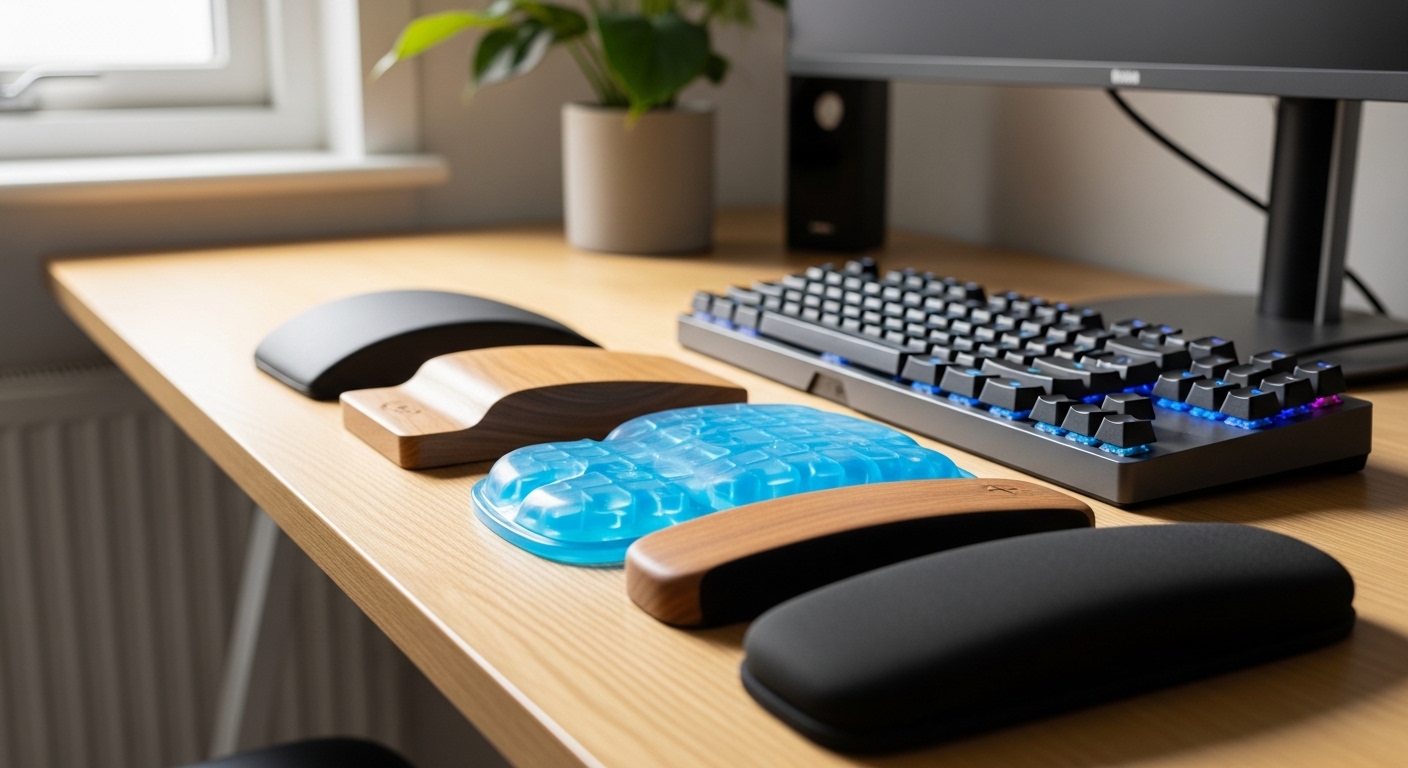
Materials play a significant role in both comfort and hygiene over time. The four most common materials are memory foam, gel, wood, and leather.
Memory foam is highly popular because it contours to the unique shape of your wrists. It provides a plush cushioning effect that many users find deeply relaxing during long sessions.
However, memory foam can retain heat, which might lead to sweaty wrists in warmer climates. It also tends to lose its shape after several years of constant pressure.
Gel rests offer a cooler sensation and a bit more bounce than foam. They are often covered in a silky fabric or plastic that is very easy to wipe down.
Gel is excellent for users who prefer a firmer, more resilient support system. It does not compress as deeply as foam, keeping your wrists at a more consistent height.
Exploring Firm Materials: Wood and Resin
You might be surprised to learn that many ergonomic experts recommend firm surfaces like wood. A firm rest prevents your wrists from sinking into the material, which can sometimes restrict blood flow.
Wooden rests are typically crafted from walnut, oak, or bamboo. They provide a very stable platform that does not shift or compress under the weight of your hands.
These products are also incredibly durable and can last a lifetime with minimal care. The natural aesthetic of wood adds a premium feel to any professional workstation.
Resin is another firm option that allows for creative designs and colors. Like wood, resin provides a solid surface that encourages proper hovering technique while typing.
If you choose a hard material, ensure the edges are rounded and smooth. Sharp corners on a wooden rest can cause discomfort and irritation during extended use.
The Role of Height and Thickness
Height is arguably the most critical factor when learning how to choose an ergonomic keyboard wrist rest. Most ergonomic keyboards require a rest height of about half an inch to one inch.
If you use a low profile keyboard, you should look for a slim rest specifically designed for that purpose. Using a standard thick rest with a slim keyboard will create a steep downward angle.
This downward angle is just as harmful as an upward one because it creates tension in the top of the hand. You want to achieve a horizontal alignment between the wrist and the keys.
Some premium rests offer adjustable heights through the use of stackable layers. This allows you to fine tune the elevation as you change keyboards or desk heights.
Always check the product specifications for the exact thickness before you buy. A difference of just a few millimeters can change the entire feel of your typing experience.
Surface Texture and Grip
The top surface of the rest determines how your skin feels during movement. Fabric covers are soft and breathable but can absorb oils and dirt over time.
Leather and synthetic leather are very durable and resist staining. They can be cleaned easily with a damp cloth, making them ideal for heavy users.
The bottom of the wrist rest is equally important for stability. You should look for a non slip rubber base that prevents the rest from sliding around.
A rest that moves during a fast typing session is frustrating and counterproductive. High quality rubber or silicone feet ensure the rest stays exactly where you place it.
Some rests even feature a weighted core to provide extra stability on smooth desk mats. A heavy rest feels more substantial and premium during daily use.
Pros and Cons of Soft vs Firm Rests
Soft rests like foam and gel offer immediate comfort and pressure relief. They are forgiving for sensitive skin and provide a cozy feel for the home office.
The downside is the potential for bottoming out if the foam is too thin. This can lead to your wrists hitting the hard desk surface beneath the cushion.
Firm rests like wood or hard plastic promote better posture by discouraging lazy habits. They remind the user to hover their hands slightly rather than dumping all their weight.
The drawback of firm materials is the lack of initial comfort for those used to padding. It can take several days to adjust to the feel of a wooden rest.
Ultimately, the choice between soft and firm depends on your personal preference and typing style. If you have pre existing wrist pain, a medium firm gel might be the safest middle ground.
Wrist Rest Width and Keyboard Compatibility
A full size keyboard with a number pad requires a rest that is approximately seventeen inches wide. Using a shorter rest will leave your right hand unsupported when using the calculator keys.
Tenkeyless keyboards are shorter, usually around fourteen inches in width. Choosing a matching size saves desk space and keeps your setup looking organized.
Compact keyboards, like sixty percent or sixty five percent layouts, need even smaller rests. A long rest paired with a tiny keyboard often looks out of place and bulky.
Some users prefer separate rests for each hand, especially when using split ergonomic keyboards. This allows for unlimited adjustment of angles and distances between the modules.
If you frequently switch between different keyboards, consider a medium sized rest that works for most of them. Versatility is a key consideration for tech enthusiasts with multiple setups.
Budget Considerations for Every User
In the world of office accessories, price often reflects the quality of materials and manufacturing. Budget options are usually made of simple foam with basic fabric covers.
These are functional and accessible but may need replacement every six to twelve months. They are a great starting point for students or those testing ergonomics for the first time.
Mid range options often feature cooling gel and reinforced stitching. These products offer better longevity and improved thermal management for all day comfort.
Premium wrist rests are often crafted from solid hardwoods or top grain leather. While the initial investment is higher, these items can last for a decade or more.
Consider the cost per year of use when making your selection. Spending more upfront on a high quality material often saves money in the long run.
Maintenance and Longevity Tips
Keeping your wrist rest clean is essential for skin health and aesthetic appeal. Fabric rests should be vacuumed regularly to remove dust and skin cells.
If a fabric rest becomes stained, use a mild detergent and a soft brush for spot cleaning. Avoid soaking the internal foam, as it can take days to dry and might develop odors.
Leather and wood should be wiped down with a microfiber cloth every week. Use a leather conditioner once or twice a year to prevent cracking or peeling.
Wooden rests benefit from a light application of mineral oil to keep the grain looking vibrant. This simple maintenance routine ensures your accessory stays in peak condition.
If you notice the internal gel or foam leaking, it is time to replace the unit immediately. Leaking materials can damage your keyboard or your desk surface.
Common Mistakes When Using a Wrist Rest
One major mistake is using the rest as a permanent landing pad while actively typing. Ergonomic experts suggest that you should only rest your palms during pauses in typing.
While the fingers are moving, your wrists should ideally be floating slightly above the rest. This technique reduces median nerve compression and allows for greater range of motion.
Another mistake is placing the rest directly under the wrist joint itself. You should aim to support the fleshy part of your palm rather than the sensitive wrist crease.
Putting pressure on the carpal tunnel area can actually increase the risk of injury. Position the rest slightly further away from the keyboard to support the base of the hand.
Many users also forget to adjust their chair height after adding a wrist rest. If the rest makes you shrug your shoulders, you need to raise your seat to compensate.
Environmental Impact and Sustainability
As we move into a more conscious era of consumption, sustainability is becoming a factor in home office choices. Plastic and synthetic foam products are harder to recycle at the end of their life.
Natural wood rests are biodegradable and often sourced from sustainable forests. Choosing a bamboo wrist rest is an excellent way to reduce your environmental footprint.
Leather is durable but carries ethical considerations for some users. Synthetic protein leather offers a vegan alternative that mimics the feel of real hide without the animal products.
Look for brands that use recycled packaging and eco friendly manufacturing processes. Small choices in your office hardware contribute to a larger global impact over time.
In 2026, many manufacturers are expected to transition toward circular economy models for office accessories. This means easier recycling programs for gel and foam components in the future.
How to Test a Wrist Rest Before Committing
If you have the opportunity to visit a store, bring your keyboard or a similar model with you. Place the rest in front of the keys and mimic your typing posture for several minutes.
Pay attention to any pressure points or areas where the material feels too hot. A good rest should feel almost invisible after a few minutes of use.
If buying online, check the return policy to ensure you can swap it if the height is incorrect. Most reputable retailers allow for a trial period for ergonomic equipment.
Read user reviews specifically from people who own the same keyboard model as you. They will often mention if the height match is successful or problematic.
Check for mentions of the base grip and whether the surface fabric irritates the skin. Crowdsourced feedback is an invaluable tool when you cannot touch the product in person.
Conclusion: Elevating Your Typing Experience
Understanding how to choose an ergonomic keyboard wrist rest is a vital skill for anyone working from home. It is not just about cushioning your hands, but about maintaining the structural integrity of your body.
By focusing on height alignment and material quality, you can transform your workspace into a comfort zone. Remember to measure your keyboard and consider your personal firmness preferences before clicking the buy button.
Investing in your health is always a wise decision for professional longevity. A small addition to your desk can make a massive difference in how you feel at the end of a long workday.
Take the time to find a rest that matches your style and your physical needs. Your wrists will thank you for the extra support and the improved posture.