

The Importance of Proper Support for the Cervical Spine
Finding the right seating solution is a critical step for anyone working from home. Persistent stiffness in the upper back and shoulders often signals that your current setup is inadequate.
Learning how to choose ergonomic chair for neck pain requires an understanding of how your body interacts with furniture. A standard chair often forces the head into a forward position which places immense pressure on the cervical vertebrae.
This guides aims to provide you with the technical knowledge needed to make an informed purchase. We will examine the mechanical features that distinguish a high performance chair from a basic model.
By the end of this article, you will understand the specific adjustments that promote a neutral posture. Your health and long term productivity depend on the decisions you make regarding your workspace today.
Neck pain is not just a minor inconvenience for modern workers. It can lead to tension headaches and reduced concentration during important tasks.
Investing in quality furniture is a proactive way to protect your physical wellbeing. We have analyzed the latest trends in ergonomic office design to bring you this comprehensive guide.
Understanding the Root Causes of Office Neck Pain
Most neck issues in the office stem from a phenomenon known as forward head posture. This happens when the monitor is too low or the chair lacks proper upper body support.
When the head tilts forward, the weight of the skull puts extra load on the neck muscles. A typical human head weighs about twelve pounds in a perfectly neutral position.
As the head moves forward by just a few inches, that perceived weight can triple. This leads to muscle fatigue and eventually causes chronic pain in the upper trapezius.
An ergonomic chair should facilitate a position where the ears are aligned with the shoulders. Achieving this ideal spinal alignment is the primary goal of any ergonomic intervention.
Poor seating also affects the thoracic spine which is the middle section of your back. If the mid back slumps, the neck must compensate by tilting upward to see the screen.
This creates a chain reaction of misalignment throughout the entire musculoskeletal system. You must look for a chair that supports the entire spine to find true relief.
The Critical Role of the Adjustable Headrest
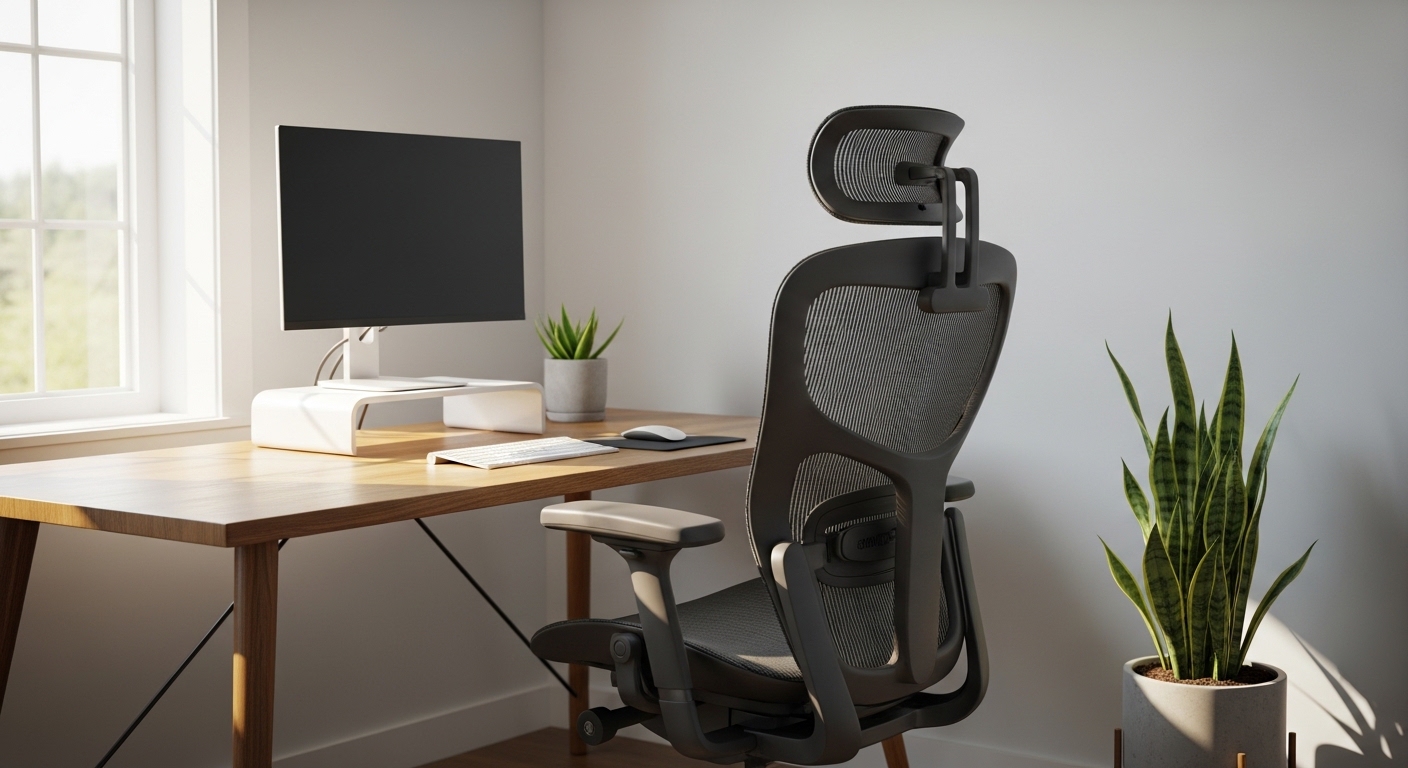
The headrest is perhaps the most vital component when considering how to choose ergonomic chair for neck pain. Not all headrests are created equal, and some can actually make the pain worse.
A fixed headrest often forces the neck into an awkward angle. You should prioritize highly adjustable headrests that offer height and tilt modifications.
The height adjustment allows the support to sit perfectly in the curve of your neck. This provides a resting place for the base of the skull during breaks.
Tilt adjustments allow you to change the angle of the support as you lean back. This ensures that the cervical spine remains supported regardless of your sitting angle.
Some premium chairs offer depth adjustment for the headrest as well. This allows you to move the support closer or further from your head.
Depth control is essential for users who prefer to sit upright while still feeling the support. Without this feature, the headrest might only be useful when reclining.
How Armrest Adjustability Impacts Your Neck
Many people fail to realize that armrests are directly linked to neck tension. If your arms are not properly supported, the weight of your limbs pulls on the shoulders.
This constant downward pull creates tension in the neck and upper back muscles. You should look for four dimensional armrests to solve this common problem.
Height adjustment is the first dimension you should check. The armrests should be level with your desk so your elbows can rest at a ninety degree angle.
Width adjustment allows you to bring the armrests closer to your body. This prevents you from flaring your elbows which can strain the rotator cuffs.
Pivot adjustments allow the armrests to turn inward or outward. This is particularly useful when typing on a compact keyboard or using a mouse.
Properly positioned armrests allow the shoulders to relax completely. This relaxation translates directly to less tension in the cervical region of the spine.
The Importance of Lumbar Support for Upper Body Health
It might seem counterintuitive to look at the lower back when your neck hurts. However, the shape of the lower spine dictates the curvature of the upper spine.
If your lower back collapses, your shoulders will naturally round forward. This rounding forces the neck to extend, leading to cervical spine compression over time.
A chair with adjustable lumbar support helps maintain the natural S curve of the spine. You should be able to move the lumbar bolster vertically to fit your height.
Some chairs also offer pressure adjustment for the lumbar area. This allows you to control how firmly the chair pushes against your lower back.
A well supported lower back makes it much easier to maintain an upright head position. This is a fundamental ergonomic principle that many budget chairs ignore.
Look for a chair that offers dynamic lumbar support. This type of support moves with you as you shift positions throughout the workday.
Evaluating Seat Pan Depth and Tilt Mechanics
The seat pan is the part of the chair you actually sit on. Its depth and tilt play a major role in your overall postural stability.
If the seat pan is too deep, it will press against the back of your knees. This often causes users to slide forward, which ruins their spinal alignment.
Sliding forward leads to a slumping posture that stresses the neck. You should look for a sliding seat pan that adjusts to your leg length.
Tilt tension is another mechanical feature that deserves your attention. It controls the amount of force required to recline the chair backrest.
A backrest that is too stiff will keep you in a rigid position. A backrest that is too loose will not provide adequate upper body support.
Modern ergonomic chairs often feature a weight sensitive tilt mechanism. This technology automatically adjusts the recline tension based on your body weight.
Pros and Cons of Different Chair Materials
The material of your chair affects both comfort and temperature regulation. Mesh is a very popular choice for modern home offices because of its breathability.
Mesh chairs provide excellent airflow which keeps you cool during long sessions. However, some lower quality mesh can lose its shape over several years.
Fabric chairs offer a more traditional feel and often provide more cushioning. High density foam is durable and supportive but can trap heat against your body.
Leather and synthetic leather offer a premium look and are easy to clean. The downside is that they lack breathability and can feel sticky in warm environments.
When addressing neck pain, the flexibility of the material matters. You want a backrest that contours to your shape without creating pressure points.
Consider the tactile feel of the headrest material specifically. It should be soft enough to be comfortable but firm enough to provide consistent support.
High Back vs Mid Back Chairs for Neck Support
High back chairs are generally the better choice for individuals suffering from neck pain. They provide a physical structure that extends all the way to the shoulders and head.
A mid back chair usually ends at the shoulder blades. This leaves the upper portion of the spine without any direct mechanical support.
High back models often include an integrated or detachable headrest. This is the primary feature needed to offload the weight of the head.
The advantage of a mid back chair is that it encourages more active sitting. This can be beneficial for core strength but is often tiring for the neck.
If your primary goal is pain relief, a high back design is the logical path. It provides a frame of reference for correct postural habits throughout the day.
Executive chairs are often high back but may lack the necessary adjustments. Always prioritize ergonomic functionality over aesthetic bulk or padding thickness.
Budget Considerations for Ergonomic Seating
Quality ergonomic furniture is an investment in your health. While budget options exist, they often lack the refined adjustment ranges found in premium models.
Entry level chairs usually offer basic height adjustment and a simple tilt lock. These might be sufficient for short periods but are rarely ideal for full workdays.
Mid range chairs typically introduce adjustable armrests and better lumbar support. This category represents the best value for most remote professionals.
High end ergonomic chairs can cost significantly more but offer extensive warranties. These chairs are built to last for over a decade of daily use.
Premium models often feature advanced materials like carbon fiber or specialized polymers. They also provide the most granular adjustment options available on the market.
Think about the cost per day over the lifespan of the chair. A high quality chair is a wise financial decision when compared to medical bills for chronic pain.
Practical Tips for Using Your New Chair
Even the best chair will not solve neck pain if it is not adjusted correctly. Start by setting the seat height so your feet are flat on the floor.
Adjust the lumbar support so it fits into the small of your back. Then, position the headrest so it supports the natural curve of your neck.
Your monitor should be at eye level so you do not have to look down. This ensures that the headrest can effectively do its job.
Take regular breaks to stretch and move around your workspace. No matter how ergonomic a chair is, the human body is designed for movement.
Use the recline feature periodically to change the pressure on your spinal discs. Modern research suggests that frequent position changes are better than sitting perfectly still.
Monitor your progress over the first few weeks of using a new chair. Your body may need time to adjust to better posture after years of slouching.
The Future of Ergonomics in 2026
The industry is constantly evolving to incorporate new findings in human factors engineering. We expect to see more integration of smart sensor technology in seating solutions.
These sensors can alert you when your posture begins to degrade. This type of real time feedback could be a game changer for neck pain sufferers.
Sustainability is also becoming a major focus for office furniture manufacturers. Many brands are moving toward recycled ocean plastics and circular manufacturing processes.
In the year 2026, ergonomic chairs will likely be more personalized than ever before. Customization will extend beyond simple mechanical levers to data driven designs.
As we spend more time in digital environments, our physical tools must keep pace. The Home Office Lab remains committed to tracking these innovations for our community.
Stay informed about new materials that offer better pressure distribution. The goal is always to create a healthier working environment for everyone.
Summary of Key Features to Look For
- Adjustable headrest height and tilt for cervical spine support.
- 4D armrests to reduce shoulder and neck tension.
- Adjustable lumbar support to maintain natural spinal curvature.
- Sliding seat pan to ensure proper leg alignment.
- Breathable mesh or high density foam for temperature and pressure control.
- A robust warranty that protects your long term investment.
Final Thoughts on Choosing Your Chair
Finding relief from chronic discomfort is a journey that starts with your environment. Understanding how to choose ergonomic chair for neck pain empowers you to take control of your health.
Do not settle for a chair that only meets the minimum requirements for comfort. Your body deserves a high performance tool that supports your professional goals.
Evaluate your specific needs based on your body type and work habits. A person who types all day has different ergonomic requirements than someone who spends hours in video meetings.
Take the time to test different styles if possible. The way a chair feels to you is ultimately the best metric for its success.
We hope this guide has provided the clarity you need to upgrade your home office. A pain free workday is within your reach with the right equipment.
Thank you for trusting The Home Office Lab for your ergonomic research. We are dedicated to helping you build the ultimate productive workspace.