

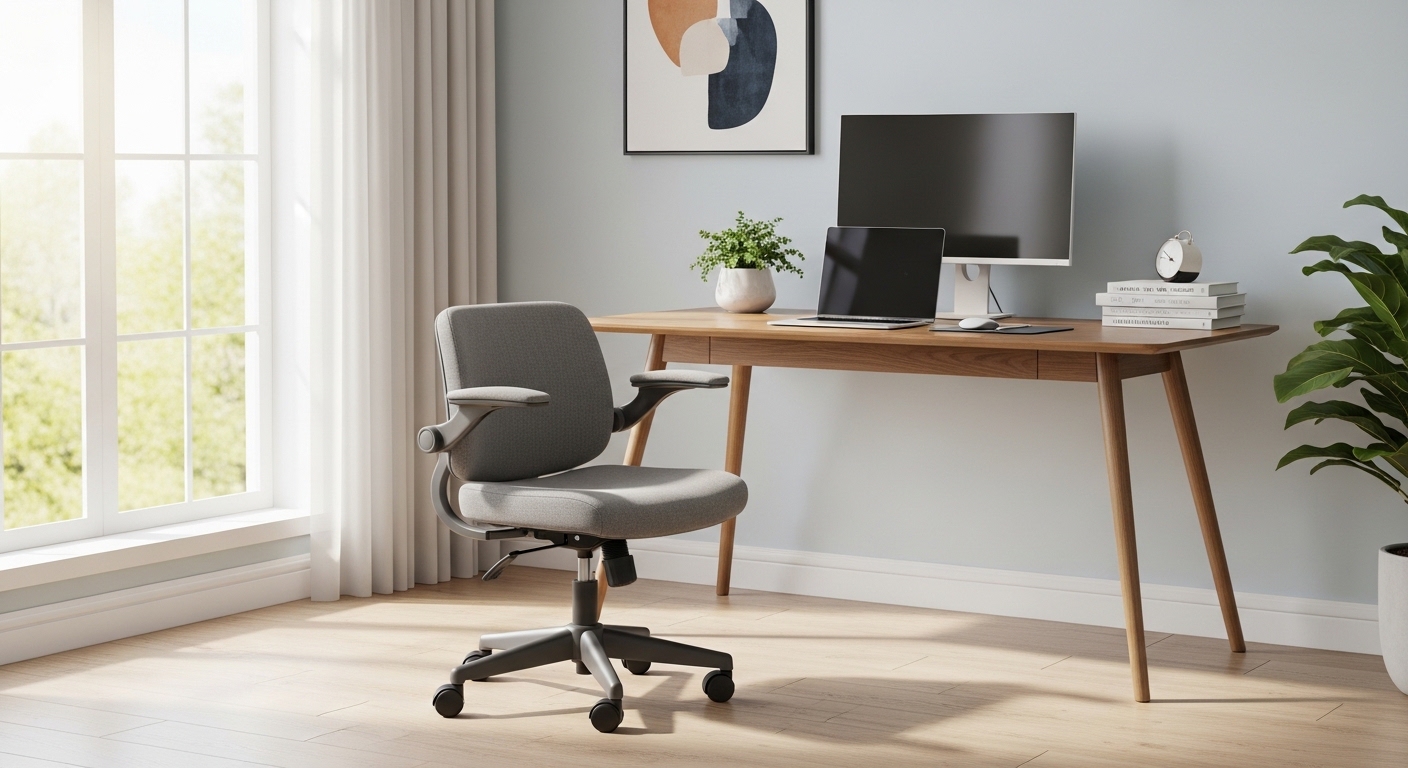
The Importance of Specialized Ergonomics for Shorter Frames
Finding the perfect seating solution is a common challenge for many professionals. Most standard office chairs are manufactured to accommodate the average person which often excludes those with shorter statures.
When you are petite, a standard chair can lead to significant physical discomfort. It often causes your feet to dangle or forces your back away from the lumbar support system.
This guide explains how to choose ergonomic chair for petite users by focusing on specific measurements. We will explore the critical components that ensure comfort and long term health for smaller body types.
Proper ergonomics is not just about comfort during the workday. It is about preventing chronic issues like circulation problems and spinal misalignment that arise from poor seating habits.
Why Standard Chairs Fail Petite Professionals
Most office furniture brands target a height range between five feet nine inches and six feet. If you are five feet four inches or shorter, these dimensions simply do not align correctly with your joints.
Standard seat pans are often too deep for shorter legs. This depth prevents the user from sitting all the way back against the backrest properly.
When the seat is too deep, the edge of the chair presses against the back of the knees. This pressure can restrict blood flow and lead to leg numbness or swelling over time.
Furthermore, standard gas cylinders often do not lower enough for petite users. This leaves feet hanging without support which puts immense pressure on the thighs.
The Foundation of Comfort: Minimum Seat Height
The most important factor in your search is the seat height range. You need a chair that allows your feet to rest flat on the floor while your knees are at a ninety degree angle.
For most petite users, a seat height that starts at fifteen or sixteen inches is ideal. Many standard chairs start at eighteen inches which is often too high for comfort.
Check the specifications for the lowest possible setting of the gas lift. A chair that stays too high will force you to use a footrest constantly.
While a footrest is a valid solution, it is better to have a chair that fits your height naturally. This ensures your entire body remains in a neutral posture throughout the day.
Understanding Gas Cylinder Options
Some manufacturers offer different cylinder heights for the same chair model. You should look for a low range cylinder if it is available as an option.
This modification allows the chair to drop closer to the ground than a standard version. It is a simple change that makes a massive difference in daily comfort levels.
Mastering Seat Depth for Proper Back Support
Seat depth is the distance from the back of the chair to the front edge of the seat pan. For petite users, a shallow seat is absolutely essential for health.
If the seat is too long, you will find yourself slouching forward to keep your knees comfortable. This movement pulls your spine away from the lumbar area of the chair.
Ideally, there should be a gap of two or three fingers between the seat edge and your knees. Look for chairs with a seat depth of sixteen inches or less.
Many premium chairs include a seat slider function to adjust this depth. However, ensure the minimum depth is actually small enough for your specific leg length.
Finding the Right Seat Width
Standard chairs are often very wide to accommodate a broad range of users. A seat that is too wide can make it difficult to use the armrests comfortably without reaching.
If you have to flare your elbows out to reach the armrests, you are putting stress on your shoulders. A narrower seat allows the arms to stay closer to the body in a natural position.
Measure your hip width and compare it to the internal dimensions of the chair. You want enough room to move but not so much that you feel lost in the seat during work.
Narrower seats also make it easier to reach your desk and peripherals. This proximity reduces strain on the neck and upper back muscles significantly.
Lumbar Support and Backrest Height
The curve of the backrest must match the natural curve of your lower spine. In larger chairs, the lumbar bulge often sits too high for a petite person.
This mismatch causes the chair to push against your mid back rather than supporting your waist. You should look for a chair with a height adjustable backrest for better alignment.
This feature allows you to slide the entire back up or down to find the perfect spot. If the backrest is fixed, ensure the lumbar curve is positioned low enough for your frame.
A backrest that is too tall can also interfere with your head and neck movements. A shorter backrest often provides a better fit for users with smaller torsos.
Integrated vs Adjustable Lumbar
Some chairs have lumbar support that is built directly into the frame. Others use an adjustable pad that moves independently of the backrest structure.
For petite users, an independent pad usually offers the most precise placement possible. Precision is key when your target support area is smaller than average.
The Role of Armrest Adjustability
Armrests are frequently overlooked but they are vital for preventing wrist and shoulder fatigue. Petite users often have narrower shoulders than the average office worker.
Look for armrests that offer width adjustment in addition to height. This allows you to pull the pads inward toward your torso for better support.
Ideally, you should find 4D armrests that move in four different directions. These can slide forward, backward, left, right, and even pivot inward for typing tasks.
If the armrests are fixed too wide, you will likely stop using them entirely. This leads to unsupported arms which places the entire weight of your limbs on your shoulders.
Headrests and the Petite User
Many petite users find that headrests are more of a hindrance than a help. Because most chairs are scaled for taller people, the headrest often pushes the head forward awkwardly.
If you prefer a headrest, it must have a significant range of vertical adjustment. It needs to drop low enough to cradle your neck curve rather than your skull.
Many experts suggest that petite users should choose a chair without a headrest. A high back or mid back chair without an attachment often provides a more ergonomic experience.
If the headrest is not removable and does not fit, it can cause chronic neck pain. Always verify the lowest height setting before committing to a headrest model in 2026.
Tension Control and Recline Mechanisms
Standard chairs are often built with heavy springs to support larger weights. This can make it very difficult for a lighter person to recline the chair at all.
If you have to use your full body weight just to tilt back, the chair is not ergonomic for you. You need a chair with adjustable tilt tension that can be set very loose.
This allows the chair to respond to your movements without requiring excessive force. Some chairs even feature weight sensitive mechanisms that adjust automatically to your size.
A smooth recline is essential for changing postures throughout the long working day. Staying in a fixed position for too long is detrimental to spinal health.
Pros and Cons of Different Chair Materials
The material of your chair affects both comfort and how you sit within the frame. Mesh is popular for its breathability but it has unique considerations for smaller users.
- Mesh provides excellent airflow and keeps the body cool during long sessions.
- Some mesh seats have firm plastic edges that might feel hard against petite legs.
- Fabric seats often offer more cushioning and a softer feel for lighter frames.
- Leather looks professional but can be slippery if the chair is slightly too large.
Mesh chairs often have a more aggressive frame shape which can be restrictive. If you are petite, ensure the mesh tension is not so high that you feel like you are bouncing off the seat.
Fabric chairs with high quality foam often provide a more contoured fit for lighter individuals. Foam can conform to your specific shape more easily than a taut mesh screen.
Budget Considerations for Petite Ergonomics
High quality ergonomics often comes with a higher price tag due to the engineering required. However, investing in a chair that fits perfectly is a long term health investment.
Entry level chairs often have fewer adjustment points which makes them harder to customize. You might save money initially but suffer from limited support over the years.
Mid range chairs typically offer better gas lifts and seat sliders for depth control. These features are often essential requirements for anyone under five feet four inches.
Premium chairs offer the best warranties and the most granular adjustment options. These brands often conduct extensive research into diverse body types including petite dimensions.
How to Measure Yourself for the Perfect Fit
Before shopping, you should take several measurements of your own body while seated. Sit in a chair where your feet are flat and measure the distance from your heel to your knee.
This measurement tells you the maximum seat height you can comfortably use. Next, measure from your tailbone to the back of your knee joint.
Subtract two inches from this number to find your ideal seat depth. Finally, measure the distance between your elbows while they are tucked against your sides.
This provides the ideal width for your armrests to prevent shoulder strain. Having these exact numbers will make it much easier to filter through chair specifications online.
Common Mistakes to Avoid
One of the biggest mistakes is assuming a footrest will fix a chair that is too large. While it helps with foot placement, it does not fix armrest width or seat depth issues.
Another mistake is choosing a chair based solely on aesthetics without checking the dimensions. A beautiful chair is useless if it causes daily physical pain or discomfort.
Do not ignore the weight capacity and tension settings of the tilt mechanism. If you are light, a stiff recline will keep you locked in a rigid upright position.
Avoid chairs that are marketed as one size fits all without specific measurements. In the world of ergonomics, true customization is always superior to a generic design.
The Benefits of a Properly Fitted Chair
When you sit in a chair designed for your size, your productivity often increases. You are no longer distracted by the need to constantly shift your weight for comfort.
Correct posture reduces the strain on your neck and upper back muscles. This can lead to fewer headaches and less fatigue at the end of the day.
Improved circulation in your legs prevents that heavy feeling that often occurs after sitting. Your body remains properly supported which allows you to focus on your work tasks.
Long term health is the greatest benefit of choosing the right chair today. You are protecting your spinal integrity for many years into the future.
Conclusion
Learning how to choose ergonomic chair for petite users requires attention to detail and specific measurements. You must prioritize seat height, seat depth, and armrest width above all other features.
Standard chairs are rarely the best choice for those with smaller frames. Look for specialized models that offer the range of movement your body specifically needs.
Investing in a chair that fits your body is an investment in your professional success. Do not settle for a chair that compromises your health or daily comfort levels.
Take your time to compare specifications and measure your space accurately. A perfectly fitted ergonomic chair will transform your home office experience forever.