

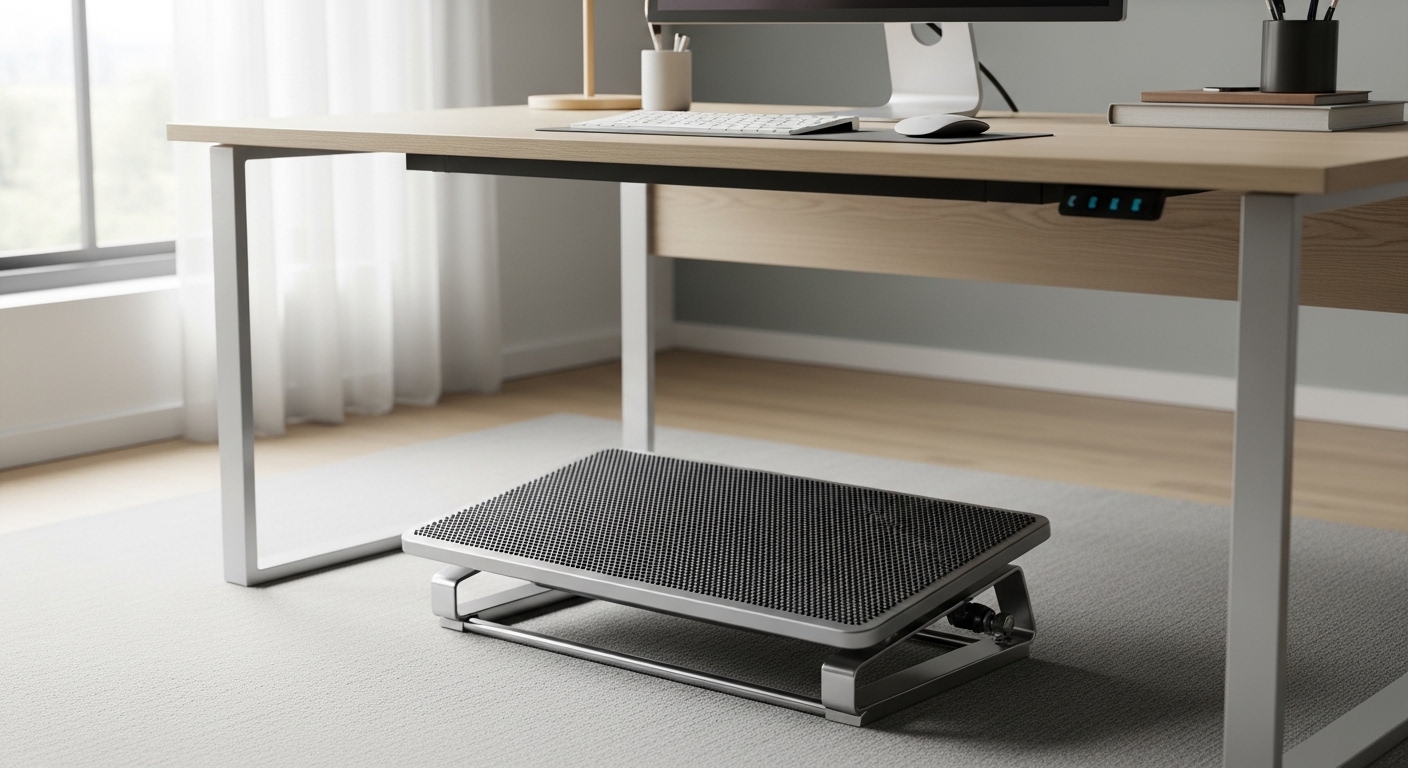
The Foundation of Office Ergonomics
Creating a healthy workspace involves more than just a comfortable chair or a large monitor. You must pay close attention to how your lower body interacts with your furniture during long working sessions.
Many professionals overlook the importance of leg support while sitting at a computer. This guide explains how to choose an ergonomic footrest for desk setups to maximize your daily comfort.
Identifying Your Height Requirements
The primary purpose of a footrest is to provide a solid base for your feet when your chair height prevents them from reaching the floor. This occurs frequently when users must raise their chairs to reach higher desk surfaces.
Proper height ensures that your hips remain slightly higher than your knees. This positioning reduces the mechanical stress placed on your lower lumbar spine.
When you evaluate different models, prioritize those that offer multiple elevation levels. A footrest with a range of three to six inches is usually ideal for most adult users.
Standard desks often sit at a fixed height of thirty inches. If you are shorter than average, you will certainly need an elevated platform to maintain a healthy posture.
Improving Blood Flow and Circulation
Sitting for extended periods can cause blood to pool in the lower extremities. This often leads to swelling in the ankles or a heavy feeling in the legs.
An ergonomic footrest encourages subtle movements that activate your calf muscles. These movements act as a secondary pump to help return blood to your heart.
By elevating the feet, you remove the pressure that the edge of the seat exerts on your thighs. This prevents the compression of vital blood vessels and peripheral nerves.
In the current year 2026, many experts emphasize the role of active sitting. A footrest is a simple tool to facilitate this dynamic movement.
Exploring Tilt and Angle Mechanisms
A static platform is better than nothing, but an adjustable angle is far superior. Most ergonomic professionals recommend a tilt range between ten and twenty degrees.
Adjusting the angle allows your ankles to rest in a neutral position. This reduces the risk of developing conditions like plantar fasciitis.
Some models feature a free floating design that rocks back and forth. This rocking motion keeps your joints loose and prevents muscle stiffness.
Locking mechanisms are also useful if you prefer a consistent, sturdy angle. Look for intuitive controls that you can operate with your feet.
Evaluating Surface Texture and Grip
The top surface of the footrest determines how much stability you feel. A smooth surface might cause your feet to slide away during deep focus.
Many premium models incorporate rubberized mats or textured bumps. These features provide a massage effect if you prefer working in your socks.
Grip is equally important on the bottom of the device. You do not want the footrest sliding across the floor every time you move your legs.
Look for weighted bases or large rubber feet to ensure the unit stays in place. Stability is a key factor when you apply pressure.
Memory Foam versus Hard Plastic Platforms
Material choice often comes down to personal preference and the environment. Hard plastic or metal models offer exceptional durability.
These rigid options are easy to clean and often feature more complex mechanical adjustments. They are suitable for users who wear heavy shoes.
Memory foam cushions provide a much softer experience. They are perfect for home office workers who prefer a cozier atmosphere.
However, foam can trap heat and might lose its shape over time. High density foam is necessary to provide adequate support.
Hybrid models also exist which combine a firm core with a soft outer layer. These provide both structural integrity and cushioned comfort.
Determining the Right Width for Your Stance
Your natural sitting stance dictates the necessary width of the footrest. A platform that is too narrow will force your knees together uncomfortably.
Measure the distance between your feet when you are sitting in a relaxed position. Most ergonomic footrests measure between twelve and eighteen inches wide.
A wider platform allows you to shift your weight throughout the day. Variety in posture is essential for preventing fatigue.
If you have a very wide chair, ensure the footrest fits between the chair legs. Compatibility with your existing furniture is a priority.
Considering the Base Stability
A footrest that flips over easily is a safety hazard and a nuisance. The base should be wider than the platform itself to ensure balance.
Check the weight capacity if you plan to rest a significant portion of your leg weight. Durable materials like steel or thick plastic are recommended here.
Inexpensive models might use thin plastic components that creak or flex. Noise can be a major distraction in a quiet office.
A heavy base also prevents the unit from shifting on carpeted surfaces. Stability contributes to a professional feel.
The Benefits of Active Rocking Features
Dynamic footrests allow for constant micro movements while you work. This is often referred to as a rocking function.
This feature is excellent for people who tend to fidget or feel restless. It helps maintain focus by providing a physical outlet.
Rocking also helps stretch the Achilles tendon and calf muscles. Regular stretching prevents the tightness associated with sedentary work.
Ensure the rocking tension is adjustable to suit your preference. You should be able to move it without excessive effort.
Specialized Features for Enhanced Comfort
Some advanced models offer heating elements for cold winter months. This can significantly improve comfort in drafty basements.
Conversely, cooling vents or fans are available for warmer climates. Temperature regulation is a subtle part of total ergonomics.
Built in massage rollers are another popular addition. These can stimulate the soles of the feet to reduce stress.
While these features are not strictly necessary, they can improve the overall experience. Luxury features often justify a higher price.
Pros and Cons of Different Footrest Types
Static footrests are affordable and extremely simple to use. They have no moving parts which means they rarely break.
However, they lack the flexibility to adapt to different users or tasks. They might not offer the perfect height.
Adjustable models provide the best ergonomic fit for various body types. They are the gold standard for office health.
The downside is that they can be more expensive and complex to set up. Some require manual tools for height changes.
Inflatable footrests are the best choice for travelers or hybrid workers. They are lightweight and easily portable.
Unfortunately, they lack the stability and durability of permanent office fixtures. They are best for temporary use only.
Integration with Standing Desks
You might wonder if a footrest is necessary for a standing desk. It actually provides a place to rest one foot while standing up.
Alternating your weight between legs reduces the strain on your lower back. This is a common practice among retail workers.
A taller footrest can also serve as a stool for short breaks. This versatility makes it a valuable investment.
Look for models with a high profile if you use a sit stand converter. Height ranges vary greatly across brands.
Budget Considerations and Value
Entry level footrests are often made of molded plastic and offer basic height steps. These are cost effective for basic needs.
Mid range options usually feature better materials and more tilt adjustment. This is where most users find the best value.
Premium models utilize high grade metals, genuine wood, or advanced foam technologies. They often include extended warranties.
Consider the cost per hour of use when making your decision. A small investment today can prevent expensive medical bills later.
Avoid the cheapest options that lack basic ergonomic certifications. Quality construction ensures your safety and comfort.
Maintaining Your Footrest for Longevity
Keep the surface clean to ensure that the grip remains effective. Dust and debris can make surfaces slippery.
For foam models, check if the cover is removable and machine washable. Hygiene is important for items in close contact.
Inspect the adjustment knobs or hinges every few months. Lubricating moving parts can prevent annoying squeaks.
Store the footrest in a dry place if it contains electronic components like heaters. Proper care extends the lifespan of your gear.
Final Conclusion on Selection
Understanding how to choose an ergonomic footrest for desk use is a vital skill for any office dweller. It completes the ergonomic puzzle.
Prioritize adjustability, stability, and material quality above all else. Your body will thank you for the extra support.
Take the time to measure your space and your posture before purchasing. A well chosen footrest is a game changer for productivity.
Visit The Home Office Lab for more tips on optimizing your workspace. We are dedicated to your professional health.