
The Evolution of the Modern Workspace
The shift toward dynamic working environments has transformed how we perceive the traditional office. More professionals are moving away from the confines of a chair to embrace the flexibility of height adjustable surfaces.
Transitioning to this new way of working is not as simple as merely standing up. It requires a deep understanding of your own physical biomechanics and limits.
Many users experience initial discomfort because they rush the process. They treat standing as a binary choice rather than a skill to be mastered over time.
This guide provides a comprehensive roadmap for those wondering how to transition to a standing desk comfortably. We will explore the science of movement and the practical steps needed for a painless shift.
At The Home Office Lab, we believe that your environment should support your longevity. A well executed transition can boost your energy and improve your long term spinal health.
Prepare to rethink your daily routine as we dive into the details of ergonomic standing. Proper preparation is the difference between a failed experiment and a life changing habit.
Understanding the Physiology of Standing
The human body is designed for movement rather than static positions. While sitting for long periods is detrimental, standing still for hours can also cause issues if done incorrectly.
When you stand, your heart must work harder to pump blood from your feet back to your chest. This process relies on the muscle pump mechanism in your calves.
If you remain perfectly still, blood can pool in your lower extremities. This lead to feelings of heaviness or even slight swelling in the ankles.
Your joints also experience different loads when you are upright. The weight of your body is distributed through your hips, knees, and the complex bones of your feet.
Muscles that have been dormant during years of sitting must now activate. These include your glutes, core, and the small stabilizer muscles around your spine.
Expecting these muscles to perform perfectly on day one is unrealistic. You must allow for a period of adaptation where your tissues become stronger and more resilient.
The Role of the Kinetic Chain
Every part of your body is connected in a kinetic chain. If your ankles are stiff, it will affect how your knees and lower back absorb the pressure of standing.
Maintaining a neutral spine is the goal of any ergonomic standing setup. This means your head should be aligned over your shoulders, and your shoulders over your hips.
Small adjustments in your stance can significantly reduce the strain on your lower back. Keeping your knees slightly soft rather than locked is a crucial technique for comfort.
Locked knees can restrict blood flow and place unnecessary pressure on the joint capsules. Think of your legs as flexible shock absorbers for your upper body.
Setting Up Your Ergonomic Foundation
Before you even begin your first standing session, you must optimize your equipment. The height of your desk is the most critical variable in this equation.
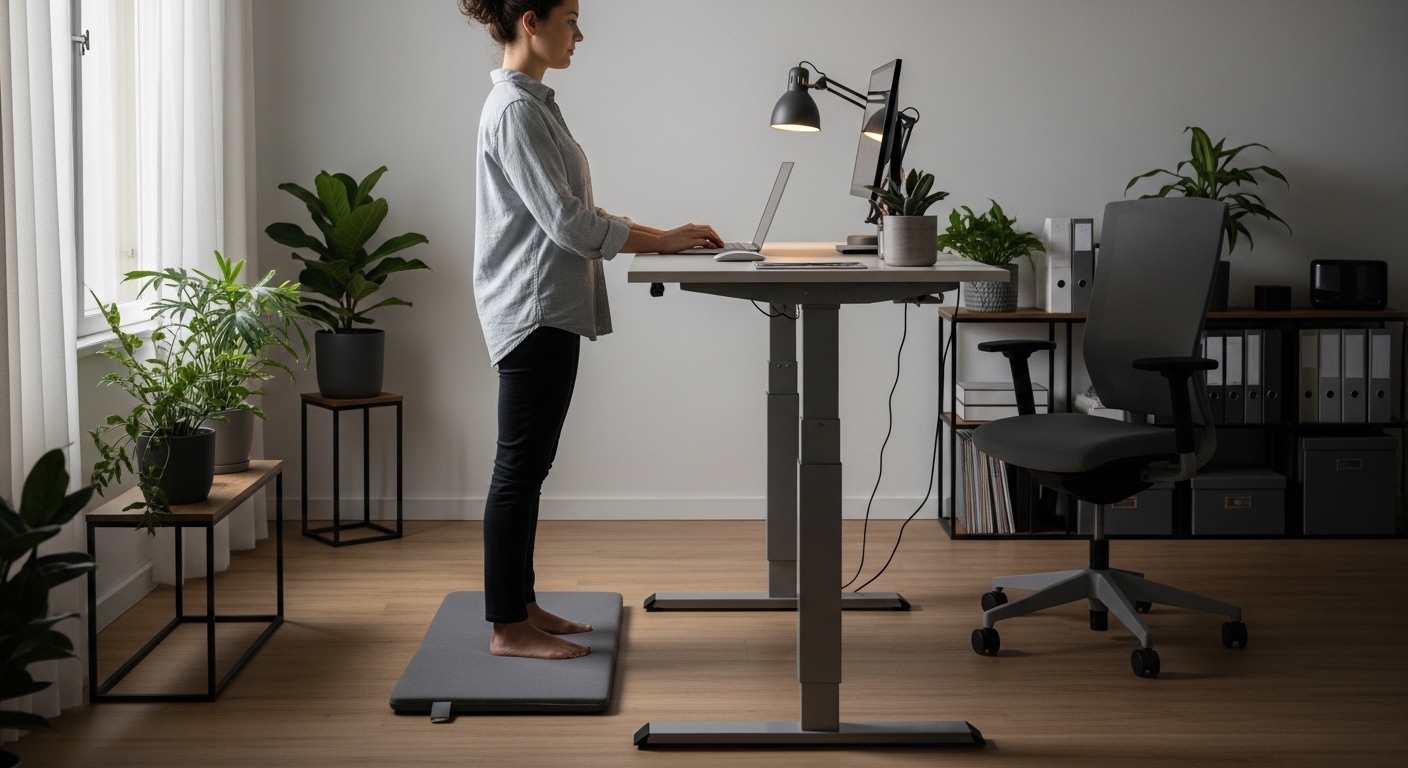
Your desk should be at a height where your elbows are at a ninety degree angle. This allows your wrists to remain in a neutral typing position without bending upward or downward.
If the desk is too high, you will naturally shrug your shoulders. This leads to tension headaches and neck pain that can last for days.
If the desk is too low, you will lean forward and round your back. This puts immense pressure on your lumbar spinal discs and defeats the purpose of standing.
Your monitor height is equally important for maintaining comfort. The top third of your screen should be at eye level to prevent neck strain.
This ensures that you are looking straight ahead rather than tilting your chin down. A monitor arm can be a vital tool for achieving this perfect visual alignment.
Optimizing Your Input Devices
The placement of your keyboard and mouse can dictate your overall comfort. They should be positioned close enough that you do not have to reach forward.
Reaching forward causes your shoulder blades to protract and pulls your spine out of alignment. Keep everything within a tight comfort zone near your body.
Consider the angle of your mouse to prevent wrist fatigue. A neutral grip is often the most sustainable choice for long standing sessions.
By refining these details, you create an environment where your body can thrive. Technology should serve your physical wellness goals in the year 2026 and beyond.
The Importance of Proper Footwear and Flooring
The surface you stand on is often the most overlooked aspect of a home office. Hardwood or concrete floors provide zero shock absorption for your joints.
Standing on these surfaces for long periods can lead to plantar fasciitis or heel pain. You need a layer of high density cushioning between your feet and the floor.
An anti fatigue mat is a non negotiable requirement for most people. These mats are designed to encourage micro movements in your feet and calves.
These tiny movements keep your blood circulating and prevent your muscles from becoming static. A good mat will have varying terrain features to keep your feet engaged.
Your choice of footwear also plays a massive role in how to transition to a standing desk comfortably. High heels or completely flat flip flops are generally poor choices for standing work.
Shoes with proper arch support help distribute your weight evenly across your foot. This prevents the collapse of your arches, which can cause referred knee pain.
Transitioning with Footwear
Some people prefer to stand barefoot to strengthen their feet. While this can be beneficial, it should be done very gradually on a supportive mat.
If you are used to wearing supportive shoes all day, your feet may lack the strength for barefoot standing. Start with supportive indoor shoes before moving to barefoot sessions.
Listen to the signals from your arches and heels throughout the day. If they begin to ache, it is time to sit down or change your footwear.
Consistency in your flooring and footwear choices creates a stable foundation for success. Never underestimate the power of a quality standing surface.
The Progressive Loading Schedule
The biggest mistake people make is trying to stand for an entire eight hour shift immediately. This is a recipe for extreme fatigue and potential injury.
You should view standing as a form of physical exercise. You would not run a marathon without training, and you should not stand all day without a gradual build up.
In the first week, aim for short bursts of standing. Twenty minutes of standing followed by forty minutes of sitting is an excellent starting point.
This ratio ensures that your muscles get a chance to work without reaching the point of exhaustion. Use a digital timer system to keep yourself on track.
During the second week, you can slowly increase the standing intervals. Try thirty minutes of standing followed by thirty minutes of sitting.
By the third week, you might feel comfortable standing for forty five minutes at a time. The key is to never push through significant physical pain.
Mastering the 1 to 1 Ratio
The gold standard for many health experts is a one to one ratio of sitting and standing. This means you spend roughly half your day in each position.
Some people eventually prefer standing for seventy percent of their day. However, everyone has a unique physical threshold that they must discover.
If you feel your posture collapsing, it is a sign that your muscles are tired. Return to a sitting position to recover before your form breaks down entirely.
A successful transition is measured in months, not days. Be patient with your body as it develops the necessary postural endurance.
Active Standing and Micro Movements
Standing still is actually quite taxing on the body. The goal should be active standing, where you are constantly making small adjustments to your weight.
Shifting your weight from your left foot to your right foot helps rest different muscle groups. You can also perform gentle calf raises while reading a long document.
These movements act as a pump for your circulatory system. They prevent the stiffness that often comes from a fixed upright posture.
Using a small footstool can also be a game changer for your comfort. Placing one foot on a raised surface alters the angle of your pelvis.
This simple change can take the pressure off your lower back. Alternate which foot is on the stool every ten to fifteen minutes.
You might also consider using a balance board. These devices require constant micro adjustments to stay level, which engages your deep core muscles.
Integrating Movement into Tasks
Use certain tasks as triggers for movement. For example, always stand during video calls or while checking your morning emails.
When you need to perform deep work that requires intense concentration, you may prefer to sit. This allows your brain to focus entirely on the task rather than maintaining upright balance.
Learning which tasks are best for standing is part of the transition. Many find that creative brainstorming is enhanced by the energy of standing.
Keep your workspace flexible so that moving between positions is seamless. A cluttered desk makes the physical transition harder to execute.
Listening to Your Body and Preventing Injury
Pain is a communication tool used by your nervous system. It is important to distinguish between the healthy tiredness of a workout and the sharp pain of strain.
Muscle soreness in the calves and glutes is common and usually harmless. This is simply your body building the stamina for standing.
However, sharp pain in the lower back or knees is a warning sign. It usually indicates that your posture is poor or you have stood for too long.
If you experience numbness or tingling in your feet, sit down immediately. This could be a sign of nerve or circulation compression that needs attention.
Staying hydrated is an underrated factor in muscle comfort. Dehydrated muscles are more prone to cramping and fatigue during the workday.
Make sure you are drinking enough water to keep your tissues supple. Proper nutrition also supports the repair of muscle fibers as they adapt.
The Importance of Stretching
A standing routine should be paired with a simple stretching habit. Focus on stretching your hip flexors, which can become tight even when standing.
Calf stretches are also vital for preventing tightness from the constant load. Use a wall to lean against and stretch your lower leg muscles daily.
Chest stretches help counteract the tendency to hunch forward toward the screen. Opening up your shoulders will make standing feel effortless over time.
Consistency with these stretches will accelerate your transition period. A flexible body handles the demands of a standing desk much more effectively.
Strategies for Long Term Success
Once you have mastered the initial transition, focus on sustainability. The novelty of a standing desk can wear off, leading to old habits.
Keep your transition goals visible to remind yourself why you started. Focus on the benefits like improved metabolic health and reduced back pain.
Invite colleagues or friends to join you in a standing challenge. Having a community of people moving more can be highly motivating.
Periodically review your ergonomic setup to ensure nothing has shifted. Sometimes monitor arms or chair heights need a quick seasonal tune up.
Remember that there is no prize for standing the longest. The goal is to avoid being static in any one position for too long.
A dynamic day that involves sitting, standing, and walking is the ultimate health strategy. Your desk is a tool to facilitate this healthy lifestyle balance.
Frequently Asked Questions
How long does the transition usually take?
Most people find that it takes about four to six weeks to feel fully comfortable. This allows your muscles and joints time to adapt to the new loading patterns.
Do not be discouraged if you need more time. Every body is different and reacts to the change in posture at its own pace.
Should I stand in socks or shoes?
If you have a very high quality mat, standing in socks can be comfortable for short periods. However, shoes provide the necessary arch support for longer sessions.
Experiment with both to see what your feet prefer. Just ensure you are not standing on a completely hard surface without protection.
Can standing desks help with existing back pain?
Many users report significant relief from chronic lower back pain. By reducing the compression caused by sitting, you allow your spinal discs to decompress.
Always consult with a medical professional if you have serious spinal issues. They can provide guidance on specific ergonomic adjustments for your condition.
Conclusion
Learning how to transition to a standing desk comfortably is a journey of self awareness. It requires you to pay attention to the subtle signals of your body and respond with care.
By following a progressive schedule and optimizing your environment, you can unlock the full potential of your workspace. You will likely notice a significant boost in your daily energy and focus.
The Home Office Lab is dedicated to helping you build a space that works for you. Standing is not just a trend, it is a commitment to a more active professional life.
Start small, stay consistent, and enjoy the benefits of a dynamic office. Your body will thank you for the investment in movement and health.