

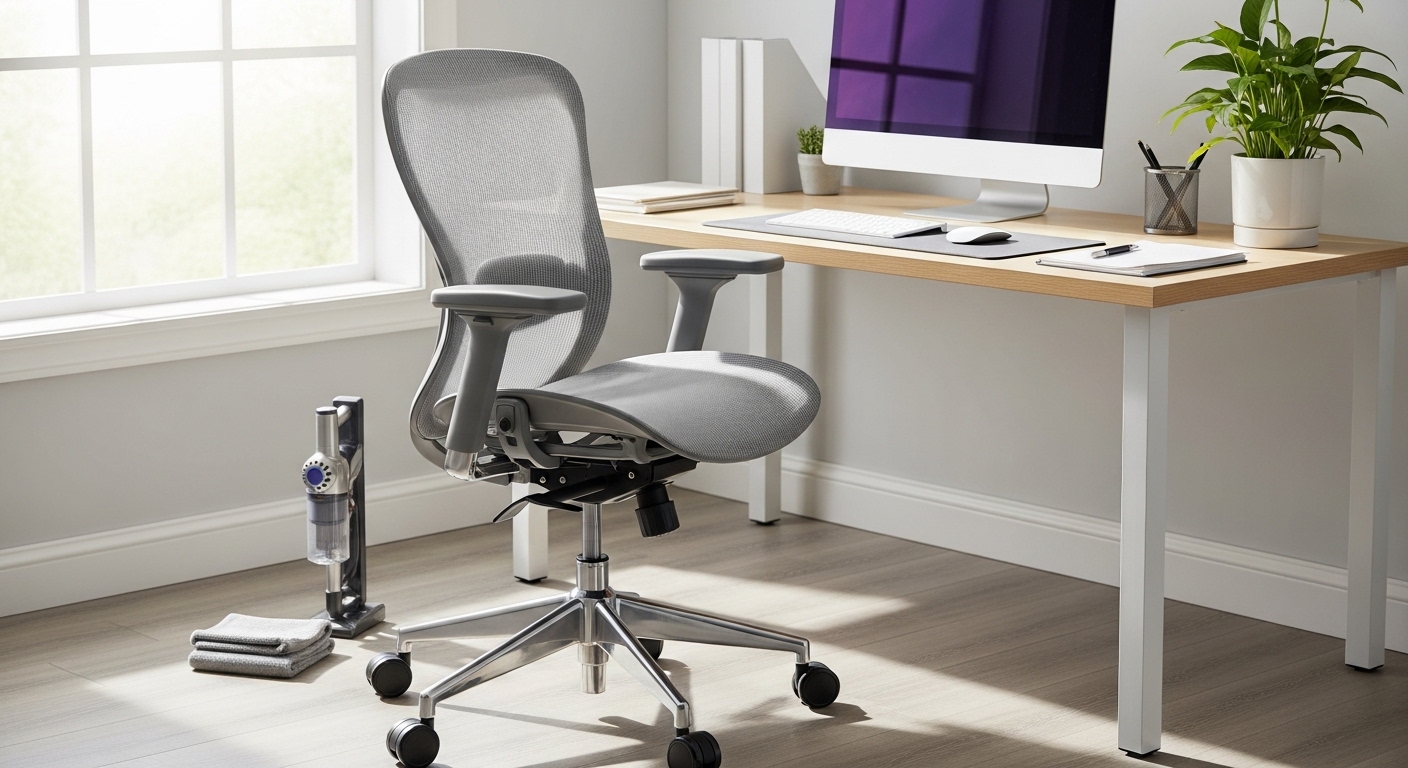
The Importance of Maintaining Your Ergonomic Seating
Maintaining a professional workspace requires more than just organizing cables or wiping down your desk. One of the most critical tasks involves understanding how to clean an ergonomic office chair effectively.
Your chair serves as the foundation of your productivity throughout the day. Over time, it accumulates dust, sweat, skin cells, and occasional food spills that can degrade the materials.
A dirty chair does more than just look unpleasant to the eye. It can also harbor allergens and bacteria that impact your respiratory health over long periods.
Proper maintenance ensures that the mechanical components continue to function as intended. Dust buildup in the pneumatic cylinder or the casters can lead to jerky movements and annoying squeaks.
In this comprehensive guide, we will explore the best practices for revitalizing your seat. Following these steps will help you preserve your significant investment for many years to come.
Identifying the Material of Your Office Chair
Before you apply any cleaning solution, you must determine what your chair is made of. Most modern ergonomic chairs utilize mesh or fabric or leather upholstery.
Each material reacts differently to moisture and chemical agents. Using the wrong product can lead to permanent discoloration or tearing of the fibers.
Locating the Care Tag
Look underneath the seat pan for a manufacturer care label. This tag provides vital cleaning codes that dictate which liquids are safe for the upholstery.
The code W indicates that you should use water based cleaning agents only. This is common for many synthetic fabrics used in office furniture.
If you see the code S, you must use a water free solvent. These chemicals are designed to dissolve oils without soaking into the padding beneath.
Code WS suggests that both water and solvents are acceptable. Code X means the material is extremely delicate and only vacuuming is permitted by the manufacturer.
Gathering Your Professional Cleaning Supplies
Having the right tools on hand will make the process much smoother. You do not need expensive machinery to achieve a professional result at home.
Start with a high quality vacuum cleaner that features a hose attachment. A soft brush nozzle is essential for loosening debris without pilling the fabric.
You will also need several clean microfiber cloths. These are superior to paper towels because they capture dust rather than pushing it around.
- Mild dish soap or specialized upholstery shampoo
- Distilled water to prevent mineral spotting
- A small bowl for mixing solutions
- Rubbing alcohol for stubborn ink stains
- Compressed air for tight crevices
- A soft bristled brush
The Initial Dusting and Vacuuming Phase
The first step in our guide on how to clean an ergonomic office chair is dry debris removal. If you wet a dusty chair, you will likely create a muddy mess that is harder to remove.
Run the vacuum over the entire surface of the backrest and seat. Pay close attention to the seams and crevices where crumbs often hide.
For mesh chairs, dust can become trapped within the weave. Use the brush attachment to agitate these areas and suck out the particles.
Do not forget to vacuum the underside of the chair as well. Spiders and dust bunnies frequently occupy the mechanical housing located beneath the seat.
If your chair has a headrest, give it extra attention. This area collects hair oils and skin products that require thorough extraction.
Cleaning Mesh Ergonomic Chairs
Mesh is popular for its breathability but can be a magnet for small particles. The open weave requires a gentle touch to avoid fraying the delicate strands.
Create a solution of warm distilled water and a few drops of soap. Dip your cloth into the mixture and wring it out until it is barely damp.
Wipe the mesh in a circular motion to lift surface oils. Avoid excessive scrubbing which can stretch the material out of shape.
If you find debris stuck inside the holes, use compressed air to blow it out. This technique is highly effective for cleaning deep within the structure.
Always allow the mesh to air dry completely before sitting back down. Applying weight to wet mesh can cause permanent sagging of the support structure.
Deep Cleaning Fabric Upholstery
Fabric chairs are comfortable but tend to absorb liquids and odors. A deep clean every few months is necessary to keep them fresh.
Check your cleaning code again to ensure water is safe. If it is, use a foaming cleanser to minimize the amount of liquid reaching the internal foam.
Apply the foam and let it sit for a minute to break down grime. Use a soft brush to work the suds into the fabric gently.
Blot the area with a dry cloth to lift the dirt and moisture. Never saturate the foam as this can lead to mold or unpleasant smells.
For chairs with persistent odors, you can sprinkle a little baking soda on the dry fabric. Let it sit for an hour before vacuuming it away to neutralize scents.
Managing Leather and Vinyl Materials
Leather chairs offer a premium feel but require specific maintenance. They are prone to cracking and fading if they become too dry.
Wipe the surface with a soft, dry cloth to remove loose dust. Avoid using harsh chemicals like bleach or ammonia on genuine leather.
Use a dedicated leather cleaner or a very dilute soap solution. Apply it to the cloth first rather than spraying the chair directly.
After cleaning, it is vital to apply a leather conditioner. This keeps the material supple and soft throughout the year 2026 and beyond.
Vinyl is more durable than leather and can handle more moisture. However, it still benefits from protective treatments that prevent UV damage.
Cleaning the Armrests and Plastic Frame
The hard surfaces of your chair often harbor the most bacteria. Armrests are high touch points that collect sweat and oils from your skin.
Use an antibacterial wipe or a cloth with soap to scrub these areas. If the plastic has scuff marks, a melamine sponge can often remove them easily.
Be careful not to get water into the adjustment buttons. Most ergonomic chairs have internal springs that could rust if exposed to moisture.
Wipe down the back frame and the adjustment levers. A clean frame makes the whole chair look significantly newer and better maintained.
Restoring the Casters and Wheels
If your chair is hard to roll, the wheels are likely clogged. Hair, carpet fibers, and hardened floor wax often wrap around the axles.
Turn the chair upside down to access the base comfortably. Use a pair of tweezers or needle nose pliers to pull out any trapped hair.
You can also use a screwdriver to gently pop the wheels out of their sockets. This allows you to clean the axle and the inside of the wheel housing.
Wipe the rolling surface of the wheels with a damp cloth. Removing gritty dirt prevents the wheels from scratching your hardwood or laminate floors.
Apply a tiny drop of silicone lubricant to the wheel swivel. This ensures smooth gliding across your home office floor during your work sessions.
Maintaining the Gas Lift and Metal Base
The metal base of an ergonomic chair can lose its luster over time. Polishing the aluminum or steel components restores the professional aesthetic of your lab.
Use a dry cloth to buff away fingerprints and smudges. For stubborn grime on the base, a mild degreaser works wonders on metal surfaces.
The gas lift cylinder should generally be left alone regarding internal cleaning. However, wiping the external piston with a clean cloth removes abrasive dust.
Check the bolts and screws while you are cleaning the underside. Use an Allen wrench to tighten any hardware that has loosened from daily use.
A stable chair is an ergonomic chair, so structural integrity is part of the cleaning process. This preventive maintenance stops wobbles before they become a nuisance.
How to Handle Tough Stains
Accidents happen even in the most disciplined home offices. Coffee and ink are the most common culprits for staining expensive upholstery.
For fresh liquid spills, blot immediately with a clean white cloth. Do not rub, as this pushes the liquid deeper into the fibers.
If you are dealing with an ink stain, use a small amount of rubbing alcohol. Apply it to a cotton ball and dab the spot carefully until the ink transfers.
Grease stains can be treated with a small amount of dish soap. The soap is designed to break down oils without damaging the underlying fabric structure.
Always test any stain remover on a hidden area first. This prevents a visible bleach spot from ruining the front of your chair.
Drying and Sanitizing Techniques
Drying is a critical step in how to clean an ergonomic office chair properly. Never use a hair dryer on high heat as it can melt synthetic fibers.
Place the chair in a well ventilated room with good airflow. Using a floor fan can significantly speed up the evaporation process.
Avoid placing the chair in direct sunlight for extended periods. Harsh UV rays can fade the color of the fabric or mesh very quickly.
If you want to sanitize the chair, use a specialized fabric sanitizer spray. Ensure the product is safe for upholstery and follow the instructions on the bottle.
Sanitizing is especially important if you share your workspace with others. It helps maintain a germ free environment for everyone in the household.
A Regular Maintenance Schedule
Consistency is the secret to a long lasting piece of furniture. You should perform a light surface cleaning at least once every month.
Deep cleaning should occur every six months to a year. This depends on how many hours per day you spend sitting in the chair.
Keep a small microfiber cloth in your desk drawer for quick wipes. Clearing away surface dust daily prevents it from becoming embedded in the weave.
Check the wheels for hair every quarter. This simple habit protects your expensive flooring from unnecessary wear and tear marks.
By following a routine, you avoid the need for aggressive cleaning later. A proactive approach is always better for the health of the materials.
The Psychological Benefits of a Clean Chair
A clean workspace has a measurable impact on your mental clarity. Sitting in a freshly cleaned chair can provide a boost to your motivation.
Clutter and dirt create visual noise that can distract you from complex tasks. A pristine environment allows you to focus on your deep work sessions.
Maintaining your tools reflects a high level of professional discipline. It shows that you value your equipment and your physical health.
Furthermore, a clean chair eliminates the worry of ruining your clothes. You can sit down in professional attire without fearing hidden dust or stains.
Investing time in maintenance pays dividends in both comfort and focus. Your ergonomic setup should always be a source of pride and comfort.
Frequently Asked Questions
Can I use a steam cleaner on my chair?
Steam cleaners are excellent for killing bacteria and lifting deep stains. However, you must check the manufacturer guidelines to ensure the heat will not damage the glue.
Some mesh materials are held together with heat sensitive adhesives. Excessive steam could cause the mesh to detach from the frame permanently.
Is it safe to wash removable covers in the machine?
If your chair has a removable cover, check the tag for washing instructions. Many covers require cold water and a gentle cycle to prevent shrinking.
Always air dry these covers instead of using a dryer. The intense heat of a dryer can ruin the elasticity of the fabric.
How do I stop my chair from squeaking?
Squeaking is often caused by metal parts rubbing together without lubrication. Use a silicone based lubricant on the moving joints while the chair is upside down.
Avoid using WD40 as a permanent lubricant because it can attract more dust. A dry lubricant is better for long term quiet operation.
Final Thoughts on Workspace Hygiene
Learning how to clean an ergonomic office chair is a skill every home professional needs. It combines technical knowledge with practical home maintenance for better results.
A well maintained chair supports your body and your career. By following the expert steps outlined in this guide, you can enjoy a healthier office.
Remember that the key to success is using the correct materials. Never rush the drying phase and always prioritize the safety of the upholstery.
Your home office is your sanctuary for creation and productivity. Treat your ergonomic furniture with the respect it deserves, and it will support you for years.