
Optimizing a workspace requires more than just a large desk and a comfortable chair. Modern professionals often struggle with managing desktop clutter which accumulates through peripheral devices and stationery.
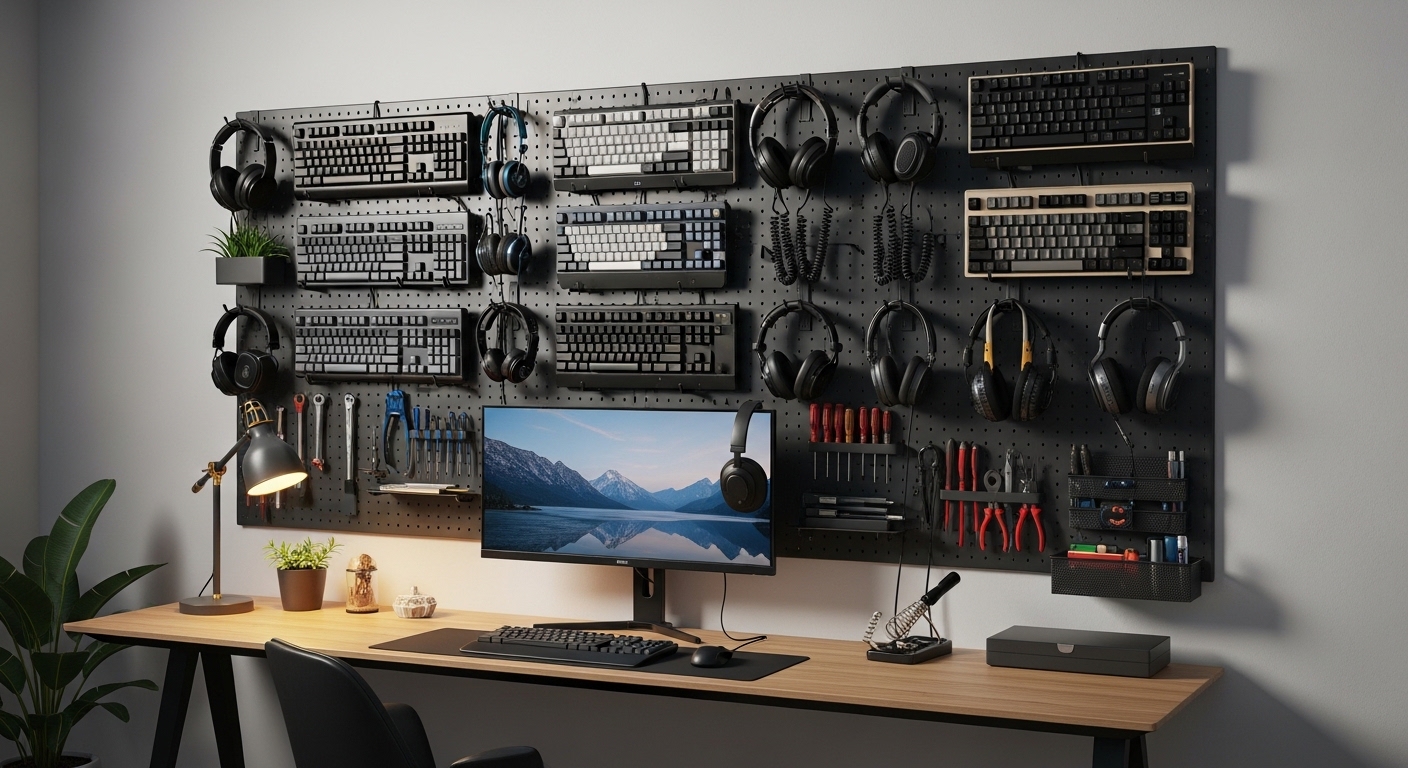
Vertical storage has emerged as the most effective solution for reclaiming valuable desk real estate. By choosing a pegboard system for home office organization you create a modular environment that adapts to your workflow.
The Home Office Lab specializes in analyzing how physical environments impact digital productivity. This guide provides a deep dive into the technical specifications and aesthetic choices available today.
The Primary Benefits of Vertical Storage Systems
A primary advantage of a pegboard is the immediate accessibility of frequently used tools. Storing items within your primary reach zone reduces the time spent searching through messy drawers.
This visibility also serves as a psychological trigger for maintaining order. When every cable and tool has a designated spot on the wall, organization becomes a seamless daily habit instead of a chore.
Furthermore, moving items off the desk surface allows for better airflow and easier cleaning. A clear desk surface often leads to a clearer mind and improved concentration levels during complex tasks.
Material Selection for Long Term Durability
The material of your board determines both its weight capacity and its visual impact. Most systems fall into three categories which are metal, wood, or plastic compositions.
Metal boards are typically manufactured from steel or aluminum with a powder coated finish. These systems offer the highest weight capacity and are often compatible with magnetic accessories.
Wood boards provide a warmer aesthetic that fits well in residential settings. Many users prefer natural plywood or fiberboard for a softer look that blends with furniture.
Plastic systems are generally the most affordable and lightweight options available. While they are easy to install they might warp under heavy loads over several years.
Analyzing Metal Board Specifications
Steel boards are frequently chosen for their industrial strength and durability in heavy use environments. They do not crack or fray around the holes even after years of moving hooks around.
Aluminum options provide a similar strength profile while being significantly lighter than steel. This makes them easier to mount on walls where weight is a primary concern for the user.
Considering Wood and MDF Alternatives
Traditional hardboard is a budget friendly choice that uses standard hole spacing. However, it can absorb moisture over time in humid environments which leads to structural degradation.
Birch plywood boards are becoming popular for high end custom builds. These offer a premium tactile feel that metal and plastic simply cannot replicate in a home office.
Understanding Hole Patterns and Compatibility
Not all pegboards are created equal when it comes to the layout of their holes. The standard hole spacing is usually one inch apart from center to center.
This standard allows you to buy hooks from many different manufacturers without worrying about fit. However, some modern proprietary systems use unique slots or non standard spacing.
Proprietary systems often offer more stylish accessories that look better in a professional office. The trade off is that you are locked into one ecosystem for all your future storage needs.
You should check the diameter of the holes before making a purchase. Common sizes include one eighth inch and one quarter inch diameters which require different hook thicknesses.
Mounting Methods for Stability and Safety
How you attach the board to your wall is a critical safety consideration. Most boards require a small gap behind them so that hooks can be inserted properly.
Metal boards often have integrated flanges that create this necessary offset automatically. Flat wooden boards require plastic or wood spacers to be placed between the board and the wall.
Wall mounting directly into studs is the most secure method for heavy equipment. If studs are not available, you must use high quality toggle bolts to prevent the board from falling.
Desk Clamped Systems for Renters
If you cannot drill holes in your walls, a desk clamped system is an excellent alternative. These frames attach to the edge of your desk and hold the board upright.
This method keeps your organization system close to your hands and moves with your desk. This is particularly useful for standing desk users who need their tools to stay at eye level.
Selecting the Right Accessories for Your Workflow
The board itself is only half of the solution. The accessories you choose will define how effectively you can organize your specific gear and peripherals.
Hooks are the most basic accessory for hanging headphones, cables, and cameras. Look for rubber coated hooks to prevent scratching your expensive hardware or electronics.
Shelves allow you to store items that do not have hanging points like speakers or decorative plants. Bins are essential for small items like thumb drives, paperclips, and memory cards.
Magnetic strips can be added to metal boards to hold screwdrivers or small metal tools. This increases the density of your storage without requiring more holes or hooks.
Visual Layout and Ergonomic Planning
Before installing your board, you should plan the layout on the floor or a table. Use blue painter tape to map out the dimensions on your wall first.
Place your most frequently used items in the center at eye level. Less used items should go at the very top or bottom of the board to minimize reaching.
Consider the color of your board in relation to your wall paint. A high contrast setup makes it easier to find tools quickly during a busy workday.
White boards reflect more light and can help a small room feel larger. Black or dark grey metal boards offer a sleek and professional aesthetic for tech enthusiasts.
Durability and Environmental Factors
The environment of your home office can impact the lifespan of your pegboard. High humidity can cause untreated wood boards to swell and eventually rot.
Powder coated metal is resistant to rust and chemical cleaners. This makes it a superior long term investment for offices located in basement or garage spaces.
You should also consider the finish of the accessories you buy. Stainless steel or zinc plated hooks will not corrode even if the air is somewhat damp.
Weight Capacity and Load Distribution
Every pegboard system has a rated weight capacity that you must respect. Exceeding this limit can damage your walls or cause the board to buckle and fail.
Distribute heavy items across multiple hooks and mounting points. Placing all heavy tech gear in one corner puts unnecessary stress on a single mounting screw.
For very heavy items like large mechanical keyboards, use wide brackets instead of thin hooks. This spreads the weight over a larger surface area of the board material.
Future Proofing Your Organization Setup
Your needs will likely change as your career and hobbies evolve over time. Choosing a modular system allows you to add more boards as your collection of gear grows.
Standard hole patterns make it easier to find new accessories in the future. In the year 2026, you might have entirely different devices that need a place on your wall.
Investment in a high quality system now prevents the need for a complete replacement later. A sturdy metal system can literally last for decades with minimal maintenance and care.
Budget Considerations for Home Office Pegboards
The cost of a complete setup includes the board, the mounting hardware, and all the hooks. While a plastic board is cheap the cost of accessories can quickly add up.
Metal systems have a higher initial price point but include many features like built in offsets. Sometimes buying a kit is more economical than purchasing every component individually from different sellers.
Consider the cost per square foot of storage when comparing different brands. A larger board offers better value if you have the wall space available to accommodate it.
Conclusion
A well organized wall is a powerful tool for any home office professional. By choosing a pegboard system for home office organization that fits your space, you invest in your own productivity.
Remember to prioritize material quality and mounting security above purely aesthetic choices. A functional and stable board will serve as the backbone of your creative laboratory for many years to come.