
The Importance of Lower Body Ergonomics
Maintaining a healthy posture at your workstation involves more than just selecting a quality chair. Many professionals overlook the role of their feet in the ergonomic equation.
When your feet dangle or rest unevenly, it creates a chain reaction of physical strain. This tension travels from your ankles up to your lower back and neck.
Learning how to choose an ergonomic footrest for desk use is a vital step for any serious home office setup. It ensures that your body remains in a neutral position throughout the workday.
A footrest serves as a foundation for your entire sitting posture. It provides the necessary resistance to keep your back pressed against the chair lumbar support.
Without proper foot support, many people tend to slouch or slide forward in their seats. This movement puts excessive pressure on the thighs and the underside of the knees.
An effective footrest eliminates this pressure by elevating the legs to a comfortable height. It allows for better blood flow and reduces the risk of swelling in the lower extremities.
Understanding the Ergonomic Triangle
The ergonomic triangle consists of your eyes, your hands, and your feet. Each point must be perfectly aligned to prevent long term fatigue.
If your desk is too high, you might raise your chair to reach the keyboard. This often leaves your feet hanging without stable ground contact.
A footrest bridges this gap effectively. It brings the floor up to meet your feet regardless of your chair height.
This adjustment is especially important for individuals with a shorter stature. Standard desk heights are often not inclusive for everyone.
Key Criteria: What to Look for Before Buying
The first factor to consider is the adjustability of the device. A fixed platform rarely meets the dynamic needs of a human body.
Look for models that offer multiple height settings. This allows you to fine tune the position based on the shoes you wear or the chair you use.
Height is not the only variable that matters for comfort. The angle of inclination is equally critical for ankle health.
An adjustable tilt allows you to keep your ankles at a comfortable angle. This prevents the muscles in your shins from becoming overly tight during the day.
Some premium models feature a free floating platform. This design encourages subtle movement of the feet and ankles while you work.
Continuous movement helps to pump blood back toward the heart. It prevents the stagnant circulation often associated with sedentary office work.
Surface Texture and Grip
The surface of the footrest should provide enough friction to keep your feet in place. A slippery surface will cause your legs to slide away constantly.
Many users prefer a textured surface with small bumps or massage rollers. these features can stimulate nerve endings in the feet and improve comfort.
If you prefer to work without shoes, look for a soft cover. Memory foam or breathable fabric covers are excellent choices for home environments.
Durability is another essential factor for daily use. The frame should be made of heavy duty plastic or reinforced metal.
A flimsy footrest will bend or creak under the weight of your legs. This noise can be extremely distracting during quiet focus sessions.
Pros and Cons of Different Footrest Types
Standard plastic footrests are the most common choice for office workers. They are generally affordable and lightweight, making them easy to move.
However, basic models often lack the range of motion found in premium versions. They might also feel less stable on hardwood floors.
Memory foam footrests have gained significant popularity in recent years. They offer a cloud like feel that is perfect for those who work in socks.
The downside of foam is that it can lose its shape over time. It also lacks the structural adjustability of mechanical footrests.
The Dynamic Rocking Footrest
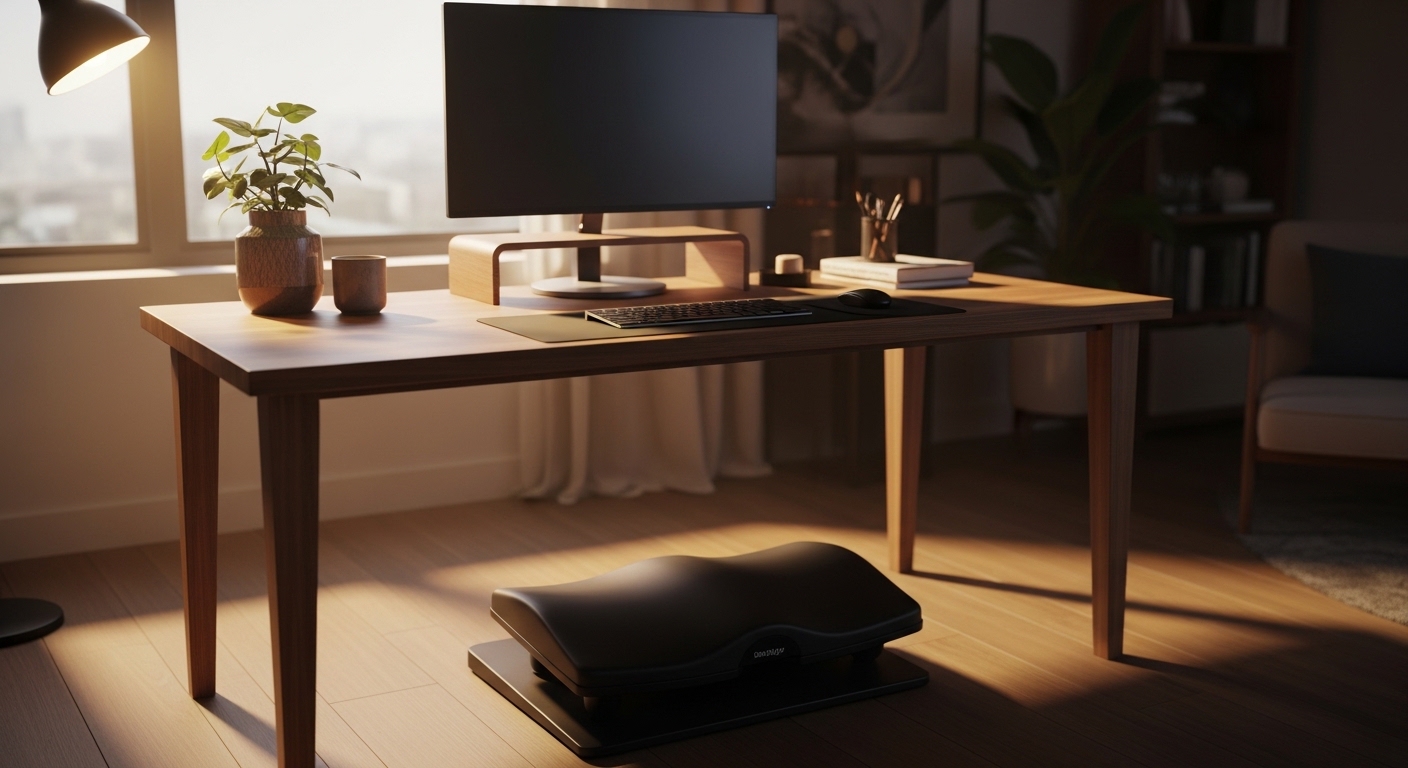
Rocking footrests are designed to promote active sitting. They allow you to rock your feet back and forth throughout the day.
This movement keeps your joints lubricated and burns a small amount of extra calories. It is a fantastic option for people who feel restless while sitting.
The primary disadvantage is that they can sometimes move too much. You might find it difficult to maintain a perfectly still posture when needed.
Some hybrid models include a locking mechanism. This gives you the best of both worlds by offering stability and motion.
Heated and Massaging Models
For those working in cold climates, a heated footrest is a luxury worth considering. It keeps your extremities warm without needing a space heater.
These models require a power outlet, which adds to the cable clutter under your desk. You must manage these extra wires carefully to avoid trips.
Massaging footrests often include vibrating motors or rotating nodes. While relaxing, they can be somewhat noisy during virtual meetings.
Always check the noise decibel ratings before choosing a motorized version. Quiet operation is a priority for professional lab environments.
Evaluating Stability and Base Design
A footrest is useless if it slides across the floor every time you move. The base must feature rubberized grips or weighted components.
If you have carpeted flooring, look for a base with small teeth. These grip the carpet fibers to prevent the unit from migrating.
For hard floors, a wide rubber pad is the superior choice. It prevents unsightly scratches on your wood or laminate surfaces.
The width of the platform also impacts your overall stability. A wide platform allows you to shift your leg position without falling off the edge.
Narrow footrests force your legs into a tight, unnatural position. This can lead to hip discomfort over long periods of time.
Measure the space between your chair legs before making a purchase. You want a footrest that fits comfortably within your specific workstation footprint.
Weight Capacity Considerations
Even though you are not standing on the footrest, it must support significant pressure. People often lean into their footrest when adjusting their position.
Check the maximum weight rating provided by the manufacturer. A robust construction ensures the device will not crack under pressure.
Metal frames are generally the most durable option available. High impact polystyrene is a good alternative that balances weight and strength.
The Impact of Materials on Longevity
The choice of material affects both comfort and hygiene. Plastic surfaces are easy to clean with a simple damp cloth.
Fabric covers tend to accumulate dust and pet hair over time. If you choose a foam model, ensure the cover is removable and machine washable.
Wood footrests offer a classic aesthetic that fits well with high end furniture. They are exceptionally sturdy but offer zero cushioning.
Eco friendly buyers should look for sustainable bamboo options. Bamboo is naturally antimicrobial and very resistant to moisture damage.
Consider the environment of your home office when choosing materials. A breathable mesh surface is ideal if your room tends to get warm.
In 2026, many manufacturers are expected to use more recycled ocean plastics. This trend reflects a growing commitment to sustainable office equipment manufacturing.
The Role of Aesthetics
While function is the priority, the look of your office matters. A sleek design contributes to a professional and organized atmosphere.
Neutral colors like black, grey, or dark wood are usually the safest bets. They blend seamlessly with most professional desk setups.
Avoid overly bright colors that might distract you or appear unprofessional on camera. A subtle appearance keeps the focus on your work.
Budget Considerations and Value
Price points for footrests vary significantly based on features. Entry level models usually focus on basic height adjustments and simple plastics.
Mid range options often introduce better tilt mechanisms and improved surface textures. These provide great value for the average office worker.
Premium footrests are built with high grade metals and advanced ergonomics. They offer the most customization and the longest warranties.
Investing in a high quality footrest is a smart move for your health. It is a one time purchase that can prevent expensive physical therapy later.
Think about the cost per use over several years. A durable model costs very little when spread across thousands of work hours.
Do not simply choose the cheapest option available online. Low quality plastics often break within a few months of heavy use.
Where to Allocate Your Budget
If you have a limited budget, prioritize adjustability over fancy materials. A well positioned plastic footrest is better than a poorly sized foam one.
Focus on models that offer at least three height levels. This versatility ensures the product remains useful if you change your chair or desk.
If your budget allows, look for models with a lifetime warranty. This is a clear indicator of the manufacturer confidence in their product quality.
How to Use Your Footrest Correctly
Once you understand how to choose an ergonomic footrest for desk, you must use it properly. Position the footrest so your knees are slightly higher than your hips.
This slight elevation helps to tilt your pelvis into a neutral alignment. It naturally encourages the lower back to maintain its healthy curve.
Keep your feet flat on the surface at all times. Avoid crossing your ankles, as this restricts blood flow and creates muscular imbalances.
Adjust the tilt so your feet are in a relaxed, natural state. Your toes should not be pointing excessively upward or downward.
Check your posture every hour to ensure you haven’t shifted. It is easy to slip into old habits during a stressful work day.
Move the footrest slightly forward or backward to find the sweet spot. The correct distance depends on your leg length and chair depth.
Combining with Other Ergonomic Tools
A footrest works best when paired with a properly adjusted chair. Your lumbar support must align with the small of your back.
Ensure your monitor is at eye level to prevent neck strain. The footrest is just one component of a complete ergonomic ecosystem.
If you use a standing desk, you can still benefit from a footrest. Resting one foot on the platform while standing can relieve pressure on your lower back.
This technique is often called the bar stool effect. It allows for frequent weight shifts that keep your muscles engaged and comfortable.
Common Mistakes to Avoid
One common mistake is choosing a footrest that is too tall. If your knees are pushed too high, it can compress the abdomen.
Another error is neglecting the floor surface compatibility. A footrest that skates around will lead to frustration and poor posture.
Do not ignore the maintenance of your footrest. Regularly tighten any loose screws to maintain a silent and stable platform.
Some people buy a footrest but continue to sit on their feet. This negates the benefits of the ergonomic tool entirely.
Force yourself to use the footrest for at least a week. It takes time for your body to adjust to a new, healthier sitting position.
If you feel pain, re-evaluate the height and angle settings. Ergonomics is a personal journey that requires constant fine tuning.
Conclusion: Final Thoughts on Selection
Selecting the right footrest is a vital investment in your long term health. It solves the fundamental problem of mismatched furniture heights.
By following this guide on how to choose an ergonomic footrest for desk, you can avoid common pitfalls. Prioritize adjustability, stability, and high quality materials.
Your feet provide the foundation for your entire body while you work. Treat them with the respect they deserve by providing a stable surface.
A more comfortable workstation leads directly to higher productivity. You can focus better when you are not distracted by leg cramps or back pain.
Take the time to measure your space and assess your personal needs. The perfect footrest is the one that you forget is even there.
Start your search today and transform your home office into a professional lab. Your body will thank you for the improved support and circulation.
Remember that ergonomics is not a luxury, but a necessity for modern professionals. Make informed choices to protect your physical well being for years to come.