
Building a high performance environment requires a deep understanding of modern networking standards.
You might find that traditional copper cables no longer meet your growing bandwidth needs effectively.
This is where light based communication becomes the superior choice for your personal data center.
We will explore how to choose fiber optic cables for homelab success in this comprehensive guide.
Fiber offers significant advantages in terms of distance and electrical isolation.
It allows you to connect devices across your home without worrying about electromagnetic interference from power lines.
As you scale your lab, the move to ten gigabit or forty gigabit speeds becomes much easier with fiber.
Choosing the right glass core and connector type is the foundation of a stable network.
Understanding the Basics of Fiber Optic Technology
Fiber optic cables transmit data using light pulses through thin strands of glass.
This method is inherently faster and more efficient than electrical signals sent over copper copper wires.
In a homelab setting, you typically deal with two main categories of fiber.
These are known as singlemode and multimode variations.
Singlemode fiber features a very small core that allows only one mode of light to propagate.
This design is perfect for extremely long distances ranging from kilometers to hundreds of miles.
Multimode fiber has a larger core which allows multiple light paths to travel simultaneously.
It is the most common choice for short range connections within a single room or rack.
While multimode is often cheaper for short distances, singlemode has become very affordable recently.
Understanding the trade offs between these two is essential for your planning phase.
Why Fiber Beats Copper for High Speed Links
Copper cables like Cat6a are excellent but they generate heat and consume more power at high speeds.
Fiber transceivers generally run much cooler than their 10GBASE T copper counterparts.
Fiber also provides total galvanic isolation between your networking equipment.
This means a lightning strike or power surge on one device cannot travel through the cable to destroy another.
If you are running cables between different buildings or floors, fiber is the safest option.
It eliminates potential ground loop issues that can plague copper installations in residential settings.
Decoding Multimode Fiber Categories
If you decide to go with multimode fiber, you will encounter various ratings like OM3, OM4, and OM5.
The OM prefix stands for optical multimode and indicates the bandwidth capabilities of the glass.
OM3 is a laser optimized cable that typically comes in an aqua colored jacket.
It supports ten gigabit speeds up to three hundred meters in distance.
OM4 is an improvement over OM3 and is also usually aqua or violet.
It extends the ten gigabit range to four hundred meters and supports faster speeds easily.
OM5 is the newest standard and is often lime green.
It is designed for shortwave wavelength division multiplexing which allows multiple signals on one fiber.
For most homelab enthusiasts, OM4 represents the best price to performance ratio currently available.
It provides plenty of headroom for future upgrades without the high cost of specialized OM5 gear.
The Technical Differences in Core Size
Most modern multimode cables use a core diameter of fifty microns.
This is paired with a cladding diameter of one hundred and twenty five microns.
Older multimode cables used a sixty two point five micron core.
Mixing these different core sizes will lead to significant signal loss and network instability.
Always check the markings on your existing cables before buying new ones.
Consistency is the key to a reliable optical network fabric.
- OM3 is suitable for basic 10G connections.
- OM4 offers better support for 40G and 100G.
- OM5 is optimized for multi wavelength transceivers.
- OM1 and OM2 are considered legacy and should be avoided.
Singlemode Fiber for the Ultimate Future Proofing
Singlemode fiber, or OS2, is often the preferred choice for professional data center technicians.
It uses a nine micron glass core which is incredibly thin.
Because the light travels in a straight line, there is almost no modal dispersion.
This allows for virtually unlimited bandwidth potential over typical home distances.
In the past, singlemode optics were much more expensive than multimode versions.
However, the price gap has narrowed significantly in the last few years.
You can now find affordable singlemode transceivers for most common switches.
Using OS2 fiber means you will never need to replace the cabling again.
OS2 cables are typically identified by their bright yellow outer jackets.
They are the gold standard for longevity in any serious homelab environment.
When to Choose Singlemode Over Multimode
If you are running fiber through conduits in your walls, choose singlemode.
The labor of pulling cable is high, so you want the most capable medium installed.
Singlemode is also required if you want to use BiDirectional transceivers.
These allow you to send and receive data over a single strand of fiber instead of two.
This can effectively double your capacity if you have limited physical strands available.
Singlemode is truly the ultimate solution for scalability in your network.
Common Connector Types for Homelab Gear
Choosing the right cable also involves selecting the correct physical connector.
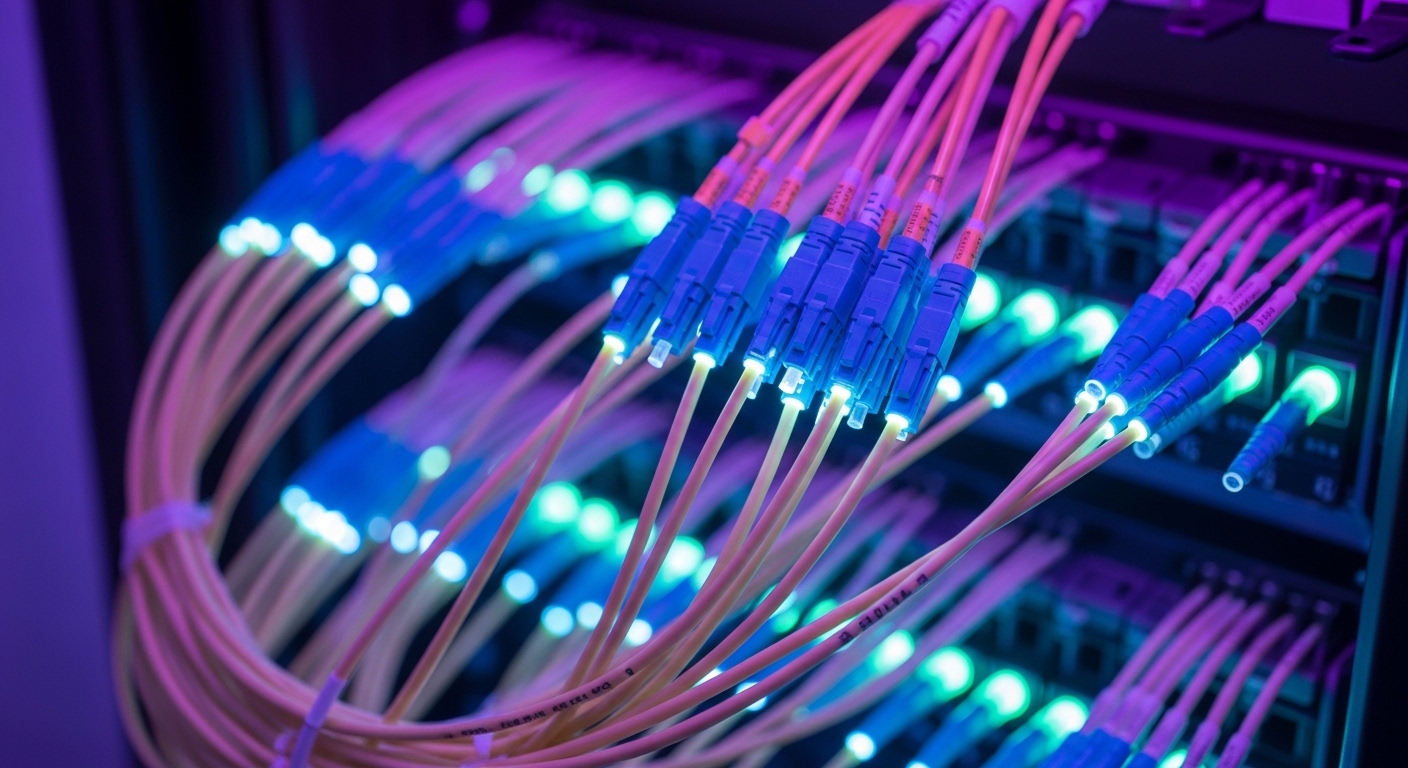
The most common connector you will see in modern labs is the LC or Lucent Connector.
LC connectors are small and feature a locking tab similar to an ethernet plug.
Their small size allows for high density port configurations on switches and patch panels.
The SC or Subscriber Connector is a larger, square shaped option.
It uses a push pull latching mechanism and is often found on older equipment or fiber converters.
You might also encounter ST connectors which use a bayonet style twist lock.
These are rarely used in new installations but appear in some industrial surplus gear.
Most SFP and SFP+ transceivers are designed specifically for LC duplex cables.
Ensuring you have LC to LC patch cords is usually the safest bet for beginners.
The Importance of Polishing Standards
Fiber connectors come with different polish types on the glass ends.
The two main types are UPC and APC variants.
UPC or Ultra Physical Contact connectors are usually blue.
They have a flat end face and are standard for most data networking applications.
APC or Angled Physical Contact connectors are green and have an eight degree angle.
This angle reduces back reflection and is common in GPON or residential fiber internet feeds.
You must never mix UPC and APC connectors directly.
Connecting a blue plug into a green socket will damage the glass surfaces and cause failure.
- LC connectors are the industry standard for SFP modules.
- SC connectors are common for media converters.
- Blue connectors signify UPC polishing.
- Green connectors signify APC polishing.
Understanding Transceivers and Compatibility
Fiber cables cannot plug directly into a switch without a transceiver.
These small modules convert electricity into light signals and vice versa.
The SFP+ form factor is the most popular for ten gigabit networking.
You must match the transceiver type to the cable you have chosen.
A multimode transceiver will not work with a singlemode cable over long distances.
Always verify that your wavelengths match on both ends of the link.
Common wavelengths include 850 nanometers for multimode and 1310 nanometers for singlemode.
Mismatched wavelengths will result in a total lack of signal or high error rates.
Some switch manufacturers implement vendor locking on their ports.
You may need transceivers that are specifically coded for your particular brand of hardware.
Active Optical Cables vs Patch Cords
If you are connecting two devices that are very close together, consider Active Optical Cables.
An AOC consists of two transceivers permanently attached to a fiber cable.
These are great because you do not have to worry about dust or cleaning connectors.
However, they are less flexible than using separate transceivers and patch cords.
If an AOC fails, you must replace the entire unit.
With modular components, you can simply swap the cable or one transceiver independently.
Jacket Ratings and Durability Considerations
The outer layer of the fiber cable is known as the jacket.
Different materials are used depending on where the cable is being installed.
OFNR or Riser rated cables are designed for vertical runs between floors.
They have fire resistant properties to prevent flames from spreading through a building.
OFNP or Plenum rated cables are required for air handling spaces.
These emit very little smoke if they happen to catch fire during an emergency.
LSZH stands for Low Smoke Zero Halogen and is popular in Europe.
It is a safer choice for poorly ventilated home server closets or small rooms.
For most patch applications inside a rack, standard PVC jackets are acceptable.
They are flexible and easy to manage in tight spaces.
Armored Fiber for Harsh Environments
If your homelab involves cables running across a floor or in a garage, consider armored fiber.
These cables have a flexible metal layer beneath the outer jacket.
This protection prevents rodents from chewing through the glass.
It also protects the cable from crushing or accidental pinching by heavy equipment.
Armored cables are slightly stiffer but offer incredible peace of mind.
They are an excellent investment for high traffic areas in a home.
Cleaning and Maintenance for Fiber Optics
The biggest enemy of a fiber optic network is microscopic dust.
A single speck of dust on the core can block light entirely.
You should never touch the ends of the fiber connectors with your fingers.
Skin oils are extremely difficult to remove and will degrade your signal significantly.
Investing in a one click cleaning pen is highly recommended for any lab owner.
These tools safely clean the ferrule with a simple push motion.
Always keep the protective dust caps on your cables when they are not in use.
Prevention is easier than troubleshooting an intermittent optical link later.
If you experience high packet loss, cleaning the connectors is the first step.
Dirty optics are the most common cause of poor network performance in homelabs.
Proper Bend Radius Management
Glass fibers can break if they are bent too sharply.
Every cable has a minimum bend radius specification that you must follow.
Avoid using tight zip ties that can crush the internal glass structure.
Instead, use velcro straps to secure your fiber bundles loosely and safely.
Bend insensitive fiber is available if you have very little space.
It uses a specialized refractive index to maintain signal integrity even when tightly curved.
Budget Considerations and Where to Save
Setting up a fiber network does not have to break your bank account.
Buying used enterprise gear can save you a significant amount of money.
Many secondary markets offer high quality transceivers for a fraction of the retail price.
Just ensure the optics have been tested before you finalize your purchase.
Buying pre terminated cables is much cheaper than trying to terminate them yourself.
Field termination requires expensive specialized tools and a high level of skill.
Measure your cable runs accurately before placing an order.
Excessive slack is hard to manage, but a cable that is too short is useless.
Consider buying a few spare patch cords in various lengths.
Having replacements on hand will save you during late night troubleshooting sessions.
The Case for Multimode in 2026
While singlemode is powerful, multimode still reigns supreme for internal rack connections.
The lower cost of transceivers makes it very attractive for short runs.
In the year 2026, we expect ten gigabit speeds to be the absolute minimum for labs.
OM4 fiber provides a reliable path to 25G or even 40G upgrades without rewiring.
If you are on a strict budget, start with OM3 or OM4.
It will serve most home users perfectly for many years to come.
Pros and Cons of Different Fiber Types
Every technology has its strengths and weaknesses that you must weigh.
Multimode is easier to align and typically uses cheaper LED or VCSEL light sources.
However, multimode suffers from modal dispersion which limits its distance at higher speeds.
Singlemode offers superior distance and bandwidth but requires more precision.
Transceivers for singlemode often consume slightly more power than multimode ones.
This might be a factor in very large homelab setups with many ports.
Copper SFP modules are also an option but they generate massive heat.
Choosing fiber over copper improves the thermal health of your expensive switches.
Summary of Fiber Advantages
Fiber is immune to the electrical noise generated by appliances and motors.
It is much lighter and thinner than high category copper cabling.
You can fit dozens of fiber strands in the same space as one Cat6 cable.
This makes cable management significantly simpler in crowded server racks.
- Fiber provides electrical isolation between devices.
- Lower power consumption at high speeds compared to copper.
- Immunity to electromagnetic interference.
- Future proof bandwidth capabilities.
Conclusion
Learning how to choose fiber optic cables for homelab builds is a rewarding process.
It opens the door to enterprise grade speeds and incredible network stability.
Start by identifying whether you need the extreme distance of singlemode or the convenience of multimode.
Match your connectors and transceivers carefully to ensure a plug and play experience.
Remember that cleanliness is paramount when working with optical components.
A small investment in proper cleaning tools will prevent hours of frustration.
As you build out your infrastructure, think about your future needs.
Fiber is a long term investment in your technical education and productivity.
The Home Office Lab is here to help you navigate these complex choices.
With the right cables, your network will perform flawlessly for years to come.