

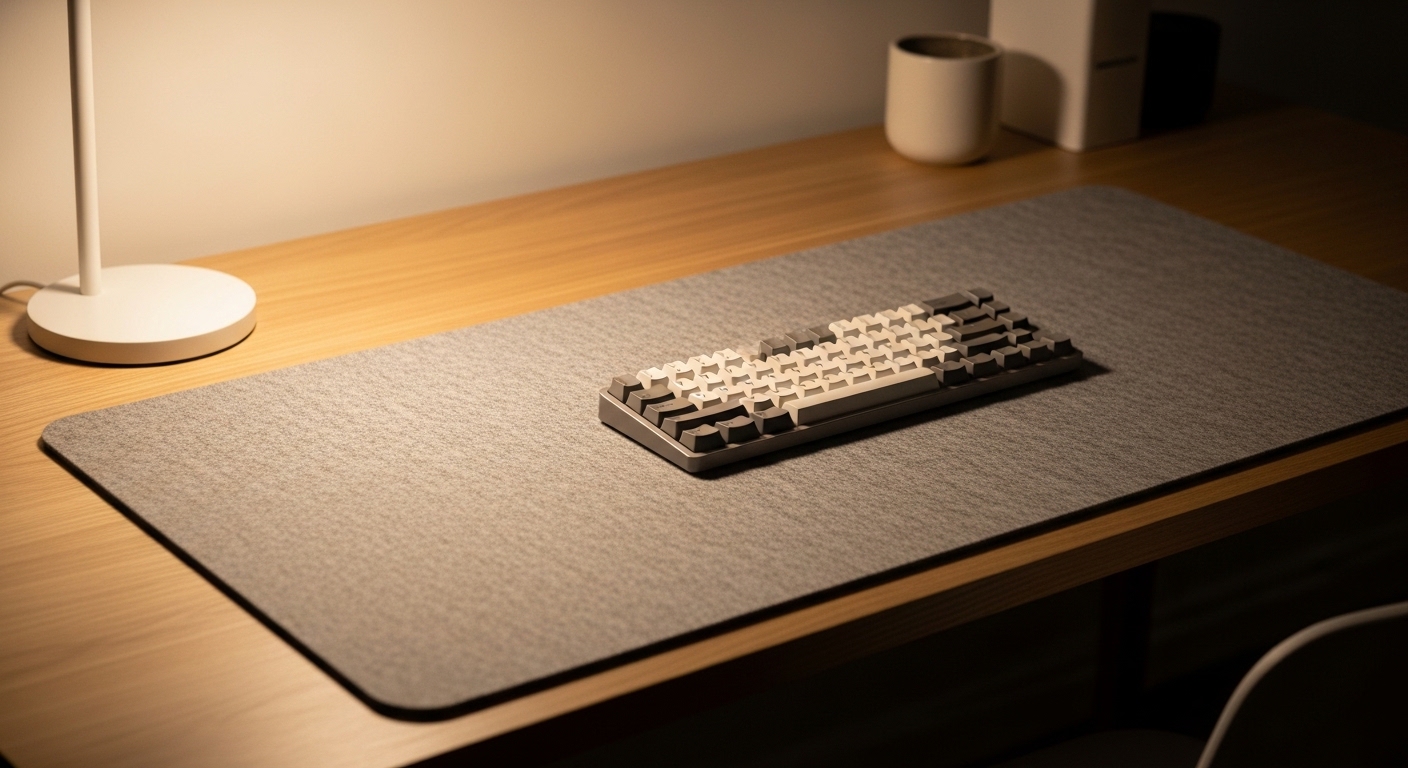
The Science Behind Felt Workspace Materials
Felt is a unique textile created by matting, condensing, and pressing fibers together. This material can be made of natural wool, synthetic polyester, or a blend of both.
Natural wool fibers possess scales that lock together during the manufacturing process. This creates a dense, cushioned surface that is highly comfortable for long working sessions.
Wool also contains a natural grease called lanolin which provides a slight resistance to moisture. Synthetic felt is typically made from recycled plastics and offers excellent durability at a lower cost.
Understanding which material you own is the first step in successful care. Natural wool requires gentle, pH neutral detergents to prevent fiber shrinkage.
Synthetic felt is slightly more resilient to warmth but can still melt under high heat. Both types require careful physical handling to avoid losing their structural integrity.
Why Felt Desk Mats Require Special Care
Unlike leather or plastic desk pads, felt has a highly porous and textured surface. Dust, skin cells, and microscopic crumbs easily become trapped within the tangled fibers.
If left uncleaned, these particles can cause abrasive wear over time. The fibers will grind against each other under the weight of your wrists and mouse.
This grinding motion breaks down the structure and leads to unsightly fiber pilling. Additionally, liquids are quickly drawn into the core of the mat through capillary action.
Once a liquid dries inside the dense mat, it leaves behind sticky residues. These residues attract even more grime and can become breeding grounds for bacteria.
The Chemistry of Cleaning Agents on Wool and Polyester
When choosing a cleaning solution, you must understand the chemical differences between natural wool and polyester. Wool is a natural protein fiber consisting primarily of keratin, which is the same protein found in human hair.
This means wool is highly susceptible to alkaline substances which can break down peptide bonds in the keratin structure. Using standard household detergents with a high pH will cause wool fibers to become dry and brittle.
On the other hand, polyester is a synthetic polymer made from polyethylene terephthalate. This plastic compound is highly resistant to acids and bases but can easily attract lipophilic substances such as body oils.
Because polyester loves oil, standard degreasing detergents can sometimes be used to lift oily stains from synthetic mats. However, these same aggressive degreasers must never be used on natural wool desk mats as they strip away natural lanolin.
The Physics of Capillary Action in Pressed Felt
Pressed felt is created by applying pressure, heat, and moisture to interlock individual fibers into a dense sheet. Because there are no woven warp or weft threads, the felt contains thousands of tiny pockets.
These air pockets act like small capillary tubes when they come into contact with liquids. When you spill coffee, the liquid is rapidly drawn deep into the center of the mat through capillary forces.
Once the liquid reaches the interior, evaporating it completely becomes difficult due to the dense surrounding fiber network. This is why immediate blotting is critical before the liquid can travel deep into the core.
If a liquid stain dries inside the mat, the dissolved sugars and solids crystallize around individual fibers. These tiny crystals create abrasive points that wear down the felt every time you move your wrists.
How Desk Mat Hygiene Impacts Workspace Ergonomics
A clean workspace is directly linked to mental clarity, physical comfort, and productivity. A dusty felt mat can release fine particles into the air every time you rest your arms on it.
These fine dust particles can trigger mild allergic reactions, causing itchy eyes or sneezing during important video calls. Over time, a dirty mat also loses its soft cushioning effect as dirt compacts the fibers.
When fibers lose their natural spring, your wrists do not receive the ergonomic support they need. Keeping the felt clean and fluffy ensures your wrists are cushioned, reducing strain during typing.
A clean mat also ensures your computer mouse glides smoothly across the surface. Any dust buildup or sticky spots will create uneven mouse friction, forcing you to exert more micro movements in your wrist.
Step One: The Daily Maintenance Routine
Maintaining your desk mat daily prevents the buildup of deep dirt. This minimizes the need for aggressive wet washing which can damage the fibers.
Shaking Out the Dust
The simplest way to clear loose debris is to take the mat outdoors. Give it a vigorous shake to release dust, crumbs, and hair.
You can also gently tap the back of the mat to dislodge trapped particles. This quick ritual keeps your workspace clean and breathing easily.
Using a Lint Roller
A sticky lint roller is an indispensable tool for felt owners. Roll it across the surface to lift hair, pet fur, and small fibers.
Be sure to use light pressure so you do not pull the mat fibers loose. Doing this twice a week will keep the texture looking crisp and fresh.
Vacuuming the Surface
If you have a vacuum with a brush attachment, you can use it on your mat. Set the suction to the lowest setting to prevent stretching the fabric.
Move the brush gently in one direction across the surface. This technique lifts deeper dust without disturbing the tight structure of the felt.
Step Two: Spot Cleaning Spills and Stains
Accidents happen even in the most organized home offices. Whether it is coffee, tea, or ink, quick action is vital to prevent permanent discoloration.
The Golden Rule of Blotting
Never rub or scrub a fresh liquid spill on felt. Rubbing forces the liquid deeper into the fibers and spreads the stain outward.
Instead, take a clean dry cloth or paper towel and press it firmly onto the spill. Let the cloth absorb the liquid through capillary action until the spot is dry.
Using Cold Water
For light organic stains, cold water is often sufficient. Dampen a clean microfiber cloth with cold water and gently dab the area.
Warm or hot water must be avoided at all costs. Heat can set the stain permanently and shrink natural wool fibers.
Applying Mild Soap
If water alone does not work, introduce a tiny drop of mild soap. Use a gentle baby shampoo or wool safe detergent.
Mix the soap with cold water to create a dilute solution. Apply the suds to the stain using a soft cloth, then blot with dry paper towels.
Repeat this process with clean water to rinse out any soap residue. Leaving soap in the felt will attract more dirt over time.
Step Three: The Deep Cleaning Process
Once or twice a year, your desk mat may require a complete wash. This is especially true if you notice a general discoloration or a stale odor.
Preparing the Bath
Fill a clean basin or sink with cool water. Add a small tablespoon of wool wash or gentle liquid soap.
Agitate the water with your hand to distribute the soap evenly. Ensure the water is completely cool to prevent structural damage.
Submerging and Soaking
Submerge the felt mat fully into the soapy water. Gently press down on the mat to help the water penetrate the dense core.
Let the mat soak for fifteen to twenty minutes. Avoid twisting or wringing the fabric while it is submerged.
Rinsing Thoroughly
Drain the soapy water and fill the basin with clean cold water. Press down on the mat to release the trapped soap.
Repeat this rinsing process until the water remains clear and free of bubbles. Complete soap removal is crucial for maintaining felt softness.
Step Four: Drying and Reshaping the Mat
Drying felt is a slow process that requires patience. Improper drying is the leading cause of warped or ruined desk mats.
The Towel Roll Method
Lay the wet mat flat on a clean dry bath towel. Carefully wrap in a towel, creating a cylinder shape.
Press down gently on the rolled towel to squeeze out excess moisture. This method removes water without twisting the delicate fibers.
Unroll the towel and transfer the mat to a fresh dry surface. Never wring out a felt mat like a regular dishcloth.
Air Drying Naturally
Lay the mat completely flat on a drying rack or clean surface. Ensure it is placed in a well ventilated area away from direct sunlight.
Direct sun and high heat can cause uneven drying and warping. Allow the mat to air dry naturally for twenty four to forty eight hours.
Never use a clothes dryer or hair dryer on your felt mat. The intense heat and tumbling motion will ruin the shape and texture.
Step Five: Removing Pills and Restoring Texture
With regular use, friction from your hands will cause wool fibers to clump together. These small fuzzy balls are known as pills.
Using a Fabric Shaver
An electric fabric shaver is the safest tool to restore a smooth texture. Glide the shaver gently across the mat surface in circular motions.
The blades will trim away the pills without damaging the underlying structure. Empty the shaver chamber frequently to maintain suction power.
Using a Felt Comb
A manual cashmere comb or wool comb can also remove pills. Pull the comb across the surface with light pressure to lift the fuzz.
Be careful not to snag the main body of the mat. Consistent grooming will keep your workspace looking pristine.
Decompressing and Ironing Your Felt Mat
If your mat becomes creased or loses its flat shape, you can restore it using steam. Wool fibers have a natural memory that responds beautifully to gentle moisture and warmth.
Using a Garment Steamer
Hang the mat or lay it flat on an ironing board. You can pass a garment steamer over it while keeping a distance of two inches.
Gently smooth the fibers with your hand while they are warm and damp. Let the mat dry completely before placing it back on your desk.
Ironing with a Pressing Cloth
If you must use a traditional iron, set it to the wool setting. Never place the hot metal surface directly onto the felt.
Place a clean damp cotton cloth over the desk mat as a protective barrier. Press the iron down gently, moving constantly to avoid burning the fibers.
What to Avoid When Cleaning Felt
Felt is a natural polymer structure that can be easily degraded. Knowing what to avoid is just as important as knowing how to clean.
Avoiding Harsh Chemicals
Bleach, ammonia, and strong spot removers will dissolve wool protein fibers. They will leave your mat patchy, discolored, and weak.
Always stick to mild detergents with neutral pH values. When in doubt, test your cleaning solution on a small corner first.
Avoiding Friction and Heat
Aggressive rubbing with brushes or rough sponges will destroy the felted structure. It creates permanent fuzziness that cannot be easily repaired.
High temperatures from hot water or dryers will shrink wool irreversibly. Keep your cleaning water cool and your drying natural.
Maintaining Your Workspace in 2026
In 2026, keeping a clean desk is more important than ever for personal productivity and health. A clean felt mat reduces the accumulation of allergens and dust in your immediate breathing zone.
By integrating these maintenance habits into your routine, you extend the lifespan of your desk accessories. A properly maintained workspace reflects clarity of mind and professionalism.
An In Depth Comparison: Wool Felt vs Synthetic Felt Care
To provide a comprehensive overview, let us analyze how natural wool and synthetic polyester felt react to different cleaning methods.
- Wool felt is highly sensitive to water temperatures and must only be washed in cold water.
- Synthetic polyester felt is more resilient to mild warmth but can still melt under direct high heat.
- Wool felt contains natural lanolin which repels small spills if you blot them immediately.
- Synthetic felt does not have lanolin but is generally less prone to staining from water based liquids.
- Wool felt requires specialized wool detergents to protect its natural protein structure.
- Synthetic felt can tolerate standard dish soaps or mild laundry detergents without damage.
This comparison shows that natural felt requires a higher level of care. However, its luxurious feel and natural sound dampening properties make the effort worthwhile.
Practical Tips for Long Term Care
Preventing dirt is always easier than removing it. Here are some actionable strategies to keep your desk mat clean during daily use.
- Avoid eating messy meals at your computer desk.
- Use coasters for all your mugs, cups, and glasses.
- Wash your hands before starting long typing sessions to minimize oil transfer.
- Rotate your desk mat every few months to distribute wear evenly.
- Keep sharp objects away from the felt to prevent snags and deep cuts.
Implementing these simple rules will reduce the frequency of deep washes. Your workspace will remain clean, beautiful, and inspiring.
Frequently Asked Questions
Can I put my felt desk mat in the washing machine?
No, you should never wash a felt desk mat in a washing machine. The spinning action and friction will cause natural wool to shrink and warp out of shape, while synthetic felt can lose its smooth texture.
How do I remove coffee stains from wool felt?
First, immediately blot up as much coffee as possible using a dry towel. Then, dab the area with a cold mixture of water and mild wool detergent, followed by a dry cloth to lift the stain.
Is it possible to iron a creased felt mat?
Yes, you can iron it, but you must use a damp pressing cloth as a protective barrier. Set your iron to the wool setting and move it constantly to prevent burning the delicate fibers.
How often should I clean my desk mat?
You should shake out dust and use a lint roller once or twice a week. Deep cleaning is only necessary once or twice a year, depending on your daily usage and spill accidents.
Conclusion
A beautiful felt desk mat is a fantastic investment for any modern workspace. Understanding how to clean a felt mat ensures that this accessory remains clean, hygienic, and soft for years to come.
By adopting regular dusting, immediate blotting of spills, and slow natural drying, you protect the dense fibers of your mat. Your home office setup will remain a pristine environment designed for maximum focus and comfort.