

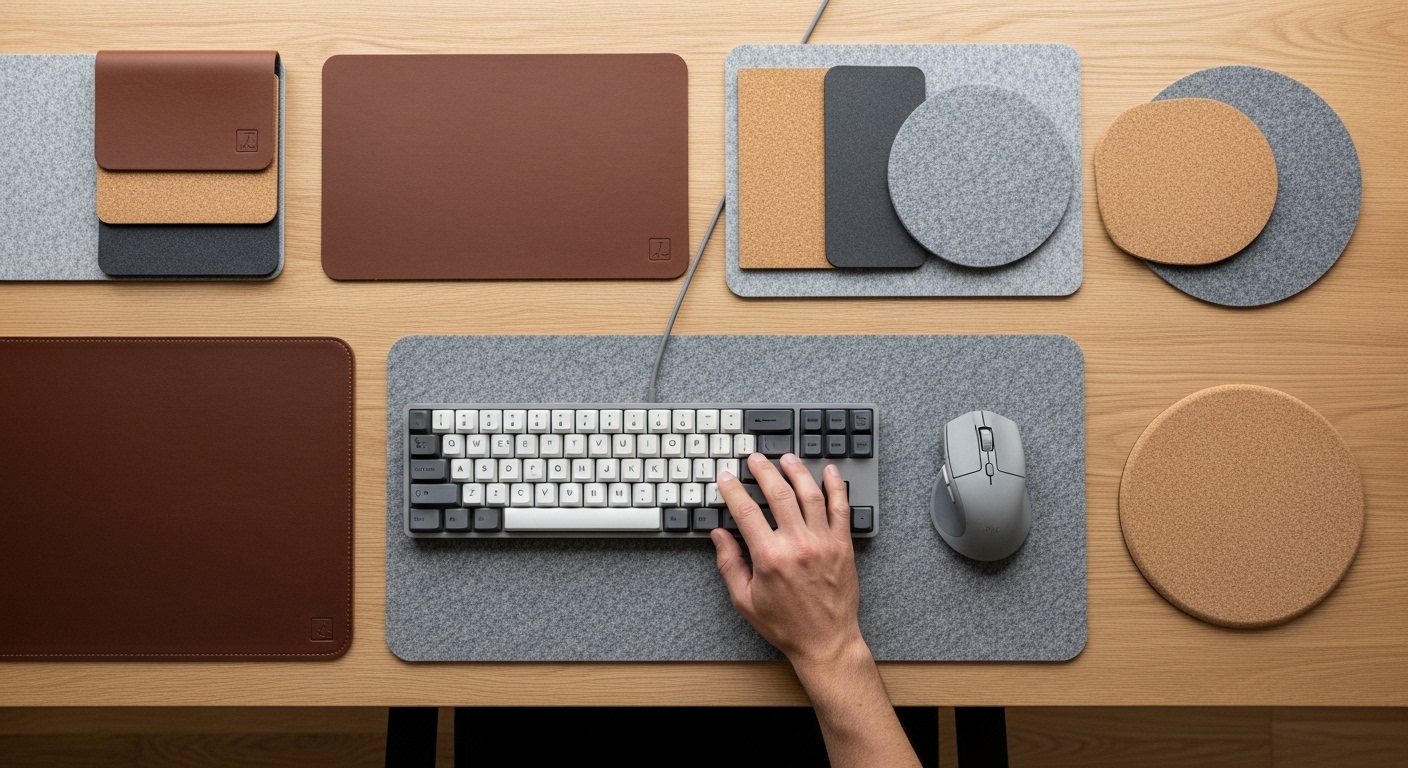
Why Your Desk Surface Matters More Than You Think
The surface of your workspace is more than just a background for your computer. It serves as the foundation for productivity every single day.
Selecting the wrong texture can lead to discomfort or poor mouse accuracy. This detailed guide explores how to choose the right desk mat material for your unique workstation.
A great mat protects your furniture from scratches and spills. It also provides a cushioned layer for your wrists and forearms during long hours.
Many professionals overlook the acoustic benefits of a quality desk covering. A thick mat can dampen the sound of a mechanical keyboard significantly.
Visual aesthetics also play a massive role in your mental focus. A clean and organized desk often leads to a clearer mind for complex tasks.
Evaluating Surface Friction for Performance
Different materials offer varying levels of resistance when moving your mouse. Gamers often prefer low friction surfaces for quick and precise movements.
If you perform creative work, you might want a bit more control. A textured surface provides tactile feedback that helps with fine cursor adjustments.
Fabric mats are generally the standard for smooth mouse tracking. They use a tight weave to ensure the optical sensor reads the surface perfectly.
Harder materials like plastic or glass offer the least resistance. These are excellent for speed focused tasks but can feel cold to the touch.
Always consider the type of mouse feet you are using. Some materials can wear down softer PTFE feet faster than others.
The Luxury of Genuine and Vegan Leather
Leather is often considered the peak of office sophistication. It provides a professional appearance that fits well in executive settings.
Genuine leather is incredibly durable and develops a beautiful patina over time. It is a natural material that feels warm and premium under your hands.
Vegan leather or polyurethane alternatives offer a similar look at a lower price point. These materials are easier to clean because they are typically waterproof.
Leather surfaces are excellent for writing on paper. The firm yet slightly yielding surface prevents your pen from poking through the page.
One drawback of leather is that it can feel sticky in humid weather. Your skin might adhere to the surface during hot summer months.
However, for a clean and minimalist aesthetic, leather is hard to beat. It remains a timeless choice for any high end office setup.
Felt and Wool: The Aesthetic Choice for Modern Offices
Felt mats have surged in popularity thanks to social media desk setups. They provide a cozy and soft atmosphere that modern workers love.
Wool felt is a premium natural fiber with inherent heat resistance. It is naturally antimicrobial and can resist odors over long periods of use.
Synthetic felt is a more affordable option usually made from recycled plastic. It offers the same visual appeal but might feel slightly rougher to the touch.
The main advantage of felt is its incredible sound dampening qualities. It creates a quiet typing experience by absorbing vibrations from the keyboard.
Maintenance is the primary concern with these fibrous materials. Spills can be difficult to remove once they soak into the fibers.
Some users find that wool can be itchy on bare skin. If you have sensitive skin, you might prefer a smoother material like fabric or leather.
Sustainability and Nature with Cork Mats
Cork is a fantastic option for the environmentally conscious professional. It is harvested sustainably from the bark of cork oak trees.
This material is naturally water resistant and stays cool in the summer. It provides a unique organic texture that stands out from synthetic alternatives.
Cork is also naturally anti static and prevents dust buildup. This makes it a healthy choice for people with allergies or respiratory sensitivities.
Some cork mats are reinforced with a rubber backing for extra grip. This prevents the mat from sliding around during intense typing sessions.
The texture of cork is relatively firm, which is great for mouse tracking. However, it may lack the cushioning found in thicker foam or wool options.
Over time, low quality cork can crack if it is rolled up frequently. Always look for high density cork to ensure the mat lasts for years.
The Versatility of Fabric and Microfiber
Fabric mats are the most common choice for a reason. They offer a perfect balance of comfort, performance, and price.
Most fabric mats feature a rubber base to ensure they stay in place. The top layer is usually a polyester blend designed for smooth gliding.
One of the biggest benefits is the ability to print complex designs. You can find mats with custom artwork to match your personal style.
Many fabric mats are now safe to put in the washing machine. This makes them extremely easy to maintain compared to leather or wool.
Look for mats with stitched edges to prevent fraying. A reinforced border significantly extends the lifespan of a fabric desk covering.
Fabric also provides a soft place for your elbows to rest. This can reduce pressure and help prevent discomfort during long work sessions.
Linoleum and Desktop Linoleum Surfaces
Linoleum is a traditional material making a comeback in modern furniture. It is made from natural raw materials like linseed oil and wood flour.
It provides a very flat and consistent surface for professional work. Many architects prefer it because it is ideal for drawing and precise drafting.
Desktop linoleum has a matte finish that does not reflect overhead lighting. This helps reduce eye strain during long periods of screen time.
The material is also naturally antistatic and resists fingerprints. It stays looking clean even with heavy daily use.
Linoleum is extremely durable and can withstand heavy equipment without permanent indentations. It is a long term investment for a dedicated home office.
While it is thinner than felt, it still provides a comfortable touch. The surface feels warm and inviting rather than cold like glass or metal.
How to Choose the Right Desk Mat Material for Writing
If you spend a lot of time taking notes by hand, material choice is vital. A surface that is too soft will cause your pen to tear through the paper.
Materials like leather and linoleum are the gold standard for handwriting. They provide the perfect resistance for a smooth and consistent pen stroke.
Felt is generally a poor choice for writing because it is too spongy. Your pen will likely wobble or snag on the loose fibers of the mat.
Fabric mats are acceptable if they are thin and have a dense core. A firm substrate is necessary to support the pressure of a ballpoint pen.
Consider a dual sided mat if you need versatility. Some mats offer leather on one side and felt on the other for different tasks.
Acoustic Benefits and Sound Dampening Properties
The acoustics of a home office can change how you feel while working. A hollow sounding desk can make typing feel loud and distracting.
Thick materials like wool or heavy rubber are excellent at absorbing sound. They kill the echo that often bounces off hard wooden or glass desks.
If you use a mechanical keyboard, a desk mat is almost mandatory. It prevents the vibrations from traveling through the desk and into your microphone.
For video calls, a quiet workspace is essential for professional communication. A large desk mat can act as a subtle acoustic panel for your desk surface.
Materials with a dense cellular structure are the most effective. These trap sound waves rather than reflecting them back into the room.
Thickness and Ergonomic Comfort Factors
The thickness of a desk mat can range from one millimeter to five millimeters. A thicker mat generally provides more comfort for your wrists.
However, a mat that is too thick can create an uneven surface for your keyboard. You want a stable base that does not flex too much under pressure.
Ergonomics is about reducing strain on the body. A cushioned surface helps distribute the weight of your arms more evenly.
If your desk has a sharp front edge, a large mat can help. Drape the mat slightly over the edge to protect your forearms from the sharp corner.
Consider the height of your mouse as well. A very thick mat might change the angle of your wrist slightly, requiring an adjustment to your chair height.
Maintenance and Cleaning by Material Type
Every material requires a specific cleaning approach to keep it looking new. Fabric mats can often be scrubbed with mild soap and warm water.
Leather requires a damp cloth and occasionally a dedicated leather conditioner. You should avoid harsh chemicals that can strip away the natural oils.
Felt is the most sensitive to liquids. You should blot spills immediately with a dry cloth and avoid rubbing the liquid deeper into the fibers.
Cork can be wiped down with a damp cloth and air dried. It is important not to soak cork, as excess moisture can cause the material to warp.
Linoleum is very resilient and can be cleaned with standard surface wipes. Its non porous nature makes it one of the most hygienic options available.
Regularly cleaning your mat also improves mouse sensor accuracy. Dust and skin cells can build up and interfere with the optical tracking of your mouse.
Budget Considerations and Long Term Value
Price points for desk mats vary wildly based on the materials used. Fabric and synthetic mats are budget friendly and offer great performance for the cost.
Genuine leather and high quality wool are premium investments. While they cost more upfront, their durability and style can last for many years.
Think about the cost per year of use rather than the initial price. A cheap mat that frays in six months is actually more expensive than a durable leather one.
In the year 2026, many workers are prioritizing sustainable and long lasting products. Buying quality over quantity is a great way to build a better workspace.
Check the warranty offered by the manufacturer. Brands that stand behind their craftsmanship often provide mats that are built to withstand daily abuse.
Final Thoughts on Your Workspace Transformation
Choosing the right surface is a personal decision based on your work habits. Whether you prefer leather or felt, the goal is to improve your daily experience.
Take the time to measure your desk before making a final purchase. A perfectly sized mat creates a cohesive and intentional look for your home office.
Remember that your comfort is the most important factor. A mat that feels good under your hands will make your work day more enjoyable.
Experimenting with different textures can refresh your motivation. Sometimes a simple change in material can make your old desk feel brand new again.
Now that you know how to choose the right desk mat material, you can shop with confidence. Your wrists and your mouse will certainly thank you for the upgrade.