

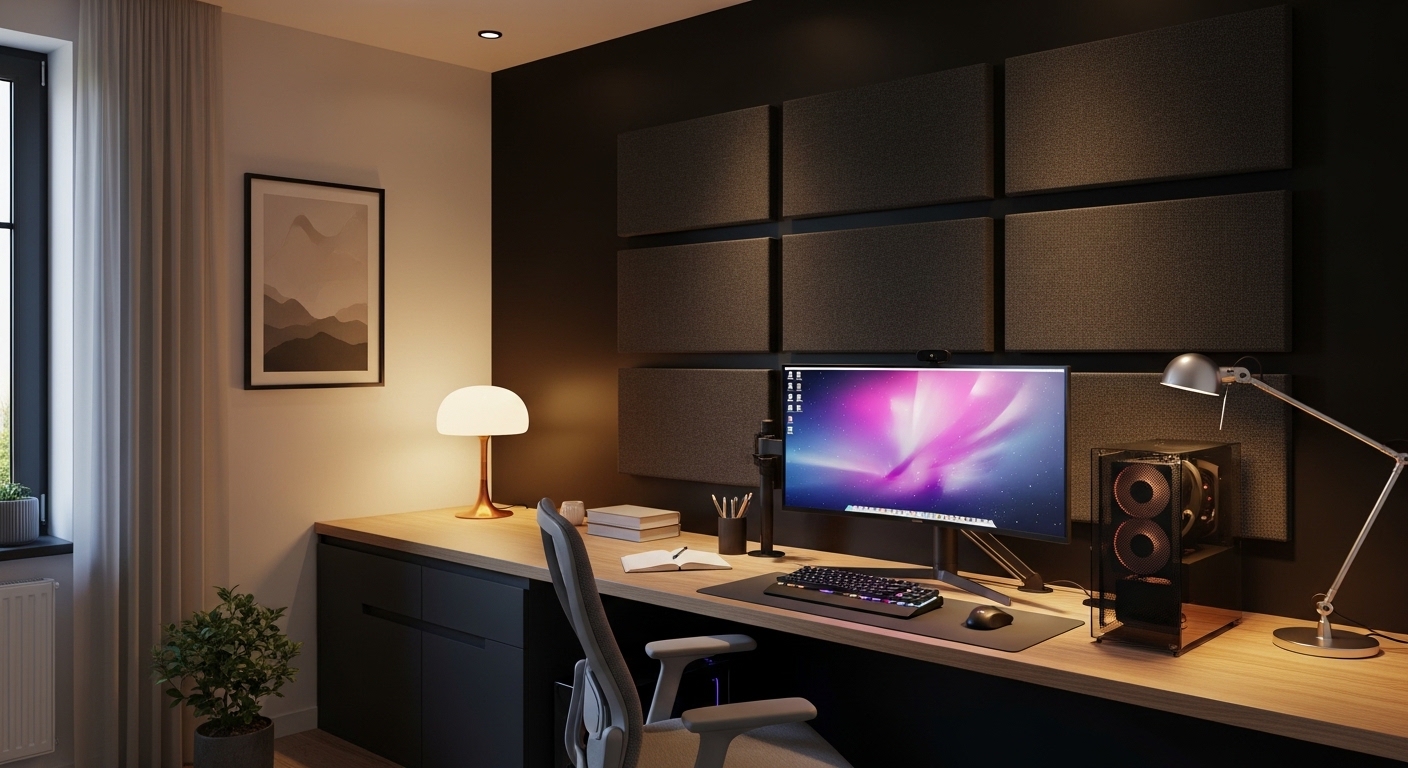
The Importance of Sound Quality in Your Workspace
Creating a professional environment requires more than just a fast computer or a comfortable chair. You must also consider the auditory environment of your room.
Echo and reverberation can make your voice sound distant during important video calls. Learning how to choose acoustic panels for home office will solve these common problems.
Many professionals focus on visual aesthetics but forget that sound defines the quality of their work. A room with hard surfaces will bounce sound waves in every direction.
This leads to auditory fatigue and a lack of clarity. By installing acoustic treatment, you take control of your workspace atmosphere.
In this guide, we will explore the science and the style of sound management. We aim to help you build a sanctuary for focus and clear communication.
Why Sound Treatment Matters for Productivity
Noise distractions are the primary enemy of deep work. When your environment is loud or echoey, your brain works harder to process information.
A quiet room allows you to focus on complex tasks without mental strain. This is especially true if you frequently record podcasts or videos for your brand.
Proper treatment also ensures that your colleagues hear you clearly. It removes the hollow sound that often plagues home offices with bare walls.
Understanding the Science of Room Acoustics
Before buying any materials, you must understand how sound behaves. Sound waves travel like ripples in a pond until they hit a surface.
When these waves hit a hard wall, they bounce back. This reflection creates what we call reverberation or echo.
Acoustic panels work by absorbing these waves rather than reflecting them. They convert sound energy into a tiny amount of heat within the material.
This process effectively stops the sound from bouncing back into the room. It creates a dry sound which is ideal for professional communication.
However, you do not want to absorb every single sound wave. A room that is too dead can feel unnatural and uncomfortable for the user.
Absorption Versus Diffusion Explained
Absorption involves soaking up sound to reduce overall volume and echo. This is the most common goal for small home offices.
Diffusion involves scattering sound waves in many directions. This prevents echo without making the room feel completely silent.
A balanced room usually uses a combination of both strategies. However, most office users will find that absorption panels provide the most immediate benefit.
How to Choose Acoustic Panels for Home Office Material Types
The material of the panel determines how well it performs. Not all panels are created equal when it comes to stopping noise.
Acoustic foam is a very popular entry level choice. It is lightweight and usually features a wedge or pyramid design on the surface.
Foam is excellent for high frequency sounds but struggles with lower tones. It is often the most affordable way to start your journey.
Fabric wrapped fiberglass panels offer much higher performance. These panels contain dense mineral wool or fiberglass cores that trap sound efficiently.
They are significantly heavier than foam but provide a much more professional look. They are often used in high end recording studios and executive offices.
Polyester panels are a modern and environmentally friendly alternative. They are made from recycled plastic and are very durable over time.
Polyester is easy to clean and does not shed fibers into the air. This makes it a safe choice for people with allergies or sensitivities.
Comparing Performance Across Different Materials
Mineral wool is generally considered the king of absorption. It can capture a wide range of frequencies with ease.
Open cell foam is better suited for specific flutter echoes. It is less effective at creating a truly quiet space in a large room.
Wood slats with felt backing have become a major design trend. They combine aesthetic beauty with functional sound absorption for the modern home.
The Critical Importance of NRC Ratings
When looking at product specifications, you will see a number called NRC. This stands for Noise Reduction Coefficient.
This rating ranges from zero to one. A rating of zero means the material reflects all sound.
A rating of one means the material absorbs all sound that hits it. For a home office, you should look for a rating of at least point seven five or higher.
Higher ratings mean you need fewer panels to achieve the desired effect. This can save you money and wall space in the long run.
Be wary of products that do not list an NRC rating. Without this data, you are essentially guessing the performance of the material.
How Thickness Impacts Frequency Response
Thickness is another vital factor in your decision. One inch panels are common but they only handle high frequencies well.
Two inch panels are the industry standard for general office use. They provide a balanced absorption profile for human speech.
If you have a very deep voice or use large speakers, consider four inch panels. These thicker options are necessary to manage bass frequencies effectively.
Analyzing Your Room Layout and Size
Every room has a unique acoustic signature. A small square room will have more sound issues than a large irregular space.
Large flat surfaces like windows and bare walls are your biggest enemies. You should identify where the sound bounces most frequently.
The most important areas are the first reflection points. These are the spots on the walls directly beside your seated position.
If you sit at a desk, the wall behind your monitors is also critical. Sound travels from your mouth and bounces off that wall into your microphone.
Treating the wall behind you is also important for video calls. This prevents your voice from bouncing back into the mic from behind.
Calculating the Necessary Surface Coverage
You do not need to cover every square inch of your walls. Over treating a room can make it feel stuffy and oppressive.
Aim for roughly twenty to thirty percent coverage of your wall surface. This is usually enough to transform the sound of a standard bedroom office.
Start with a few panels and add more if the echo persists. It is easier to add panels than to repair walls after removing too many.
Aesthetics and Integration with Interior Design
Acoustic panels do not have to look like grey foam blocks. Modern options come in various colors and artistic shapes.
Hexagonal panels allow you to create geometric patterns on your wall. This turns functional equipment into a piece of contemporary art.
Fabric wrapped panels can be matched to your office furniture or curtains. This creates a cohesive look that feels intentional and professional.
Some companies even offer printed panels that look like photographs or paintings. This allows you to hide your acoustic treatment in plain sight.
Wooden slat panels provide a warm and organic feel to a workspace. They are perfect for those who prefer a Scandinavian or mid century modern style.
Maintaining a Professional Background for Video
Your background is your digital business card. Clean and well placed panels can make you look like a tech expert or a creative pro.
Avoid messy or uneven foam placement which can look cheap. Invest in panels with beveled edges for a more refined appearance.
Installation Methods and Surface Protection
How you mount your panels depends on your living situation. Renters need to be careful about damaging paint or drywall.
Spray adhesive is permanent and very difficult to remove. It is best for homeowners who are certain about their panel placement.
Command strips or heavy duty double sided tape are better for temporary setups. These allow you to move panels without leaving large holes in the wall.
For heavy fabric panels, you might need z clips or impaling clips. These require screws but offer the most secure mounting for heavy materials.
Some panels come with self adhesive backings. These are convenient but may not stick well to textured walls or low VOC paint.
Considerations for Ceiling Installations
The ceiling is often the largest untreated surface in a room. Installing acoustic clouds can drastically improve sound quality.
Clouds are panels that hang horizontally from the ceiling. They are excellent at catching sound that bounces up and down between the floor and ceiling.
Budgeting for Acoustic Treatment
The cost of acoustic panels varies wildly based on material and quality. Foam is the most budget friendly option for beginners.
You can often buy a large pack of foam panels for the price of one high quality fabric panel. However, the longevity of foam is generally lower.
Fabric panels are a long term investment. They do not crumble or discolor over time like some foams do.
Consider your budget as a cost per decibel of improvement. Higher quality panels provide better value because they do more work per square inch.
If you are on a tight budget, focus on the first reflection points first. You can always expand your setup as your business grows.
The Real Cost of Cheap Materials
Cheap foam is often very thin and lacks density. It might look good in photos but it won’t stop the echo effectively.
Furthermore, some inexpensive foams are not fire rated. Always check for fire safety certifications before putting large amounts of foam on your walls.
Additional Sound Management Strategies
Acoustic panels are just one part of a quiet home office. You should also consider floor coverings like thick rugs.
Rugs help absorb sound that would otherwise bounce off hard wood or tile. They also reduce the noise of moving your chair during the day.
Heavy curtains can block sound from windows and outside traffic. This is a simple way to add soft surfaces to a room with many glass features.
Bookshelves filled with books also act as natural diffusers. They break up flat wall surfaces and scatter sound waves effectively.
If you have gaps under your door, a door sweep can block noise from the rest of the house. This keeps your office quiet even when the family is home.
Common Mistakes When Choosing Panels
Many people buy panels that are too thin for their needs. Thin foam will not help if you have a deep voice or a booming sound system.
Another mistake is placing panels randomly around the room. Symmetry is important for a balanced soundstage in your workspace.
Do not forget the corners of your room. Corners are where bass energy tends to build up and cause muddy sound.
Using bass traps in the corners will complement your wall panels. This creates a much more accurate listening environment for music and voice.
Finally, do not ignore the importance of lighting. Some panels can cast harsh shadows if your desk lamps are not positioned correctly.
The Future of Home Office Acoustics
As remote work evolves, so does the technology behind acoustic materials. We are seeing more sustainable materials entering the market.
In 2026, many professionals will choose panels that also serve as smart home interfaces. The goal remains the same regardless of the new technology involved.
We want a workspace that supports our mental clarity and professional presence. Choosing the right panels is a step toward that goal.
Always prioritize your specific needs over general trends. Your room, your voice, and your work style should dictate your final choice.
Conclusion
Understanding how to choose acoustic panels for home office is a journey of both science and art. You must balance technical performance with the visual style of your home.
Start by identifying your primary sound issues like echo or outside noise. Select a material that fits your aesthetic preferences and your budget constraints.
Remember that even a small amount of treatment is better than none. You will notice the difference in your first meeting after installation.
Your ears and your colleagues will thank you for the effort. A well treated room is the ultimate tool for any serious professional working from home.