

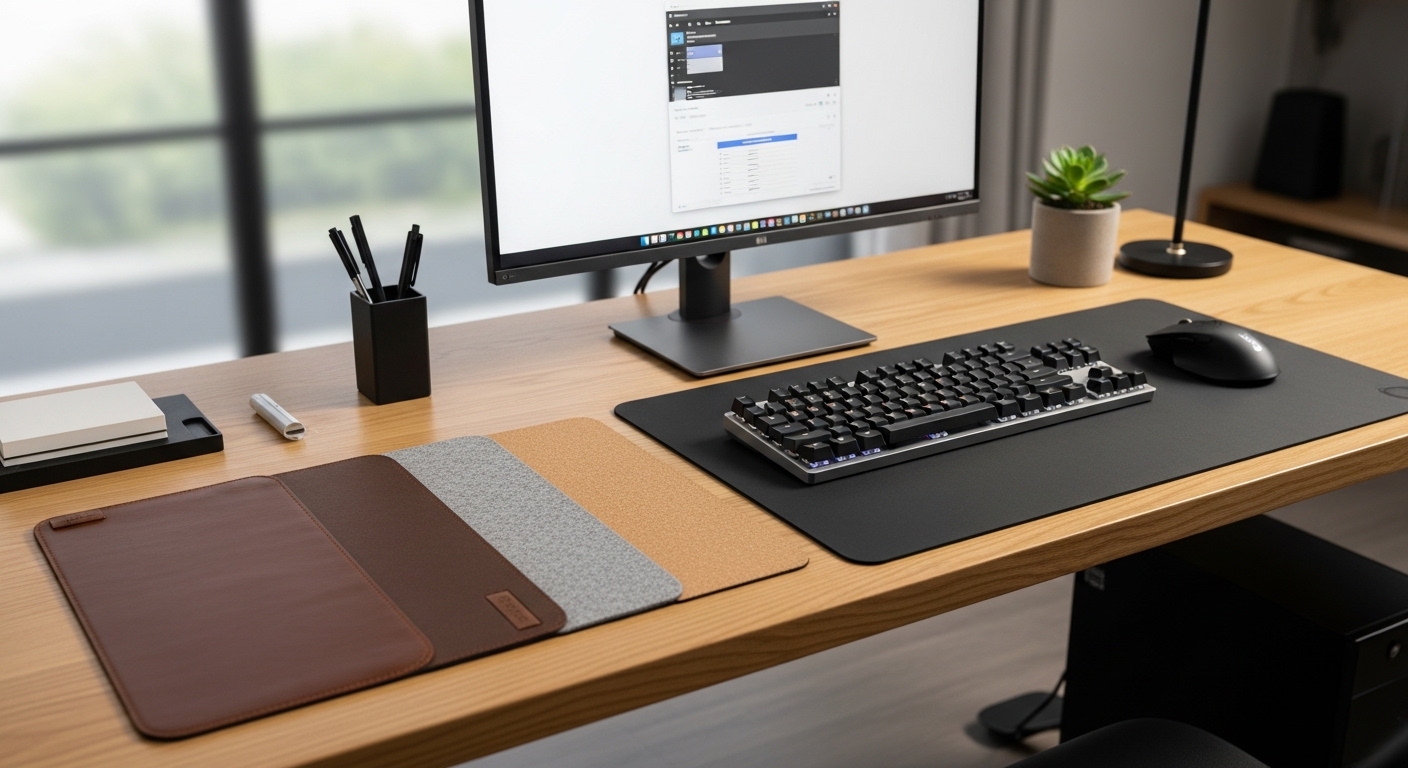
The Importance of Surface Selection
Creating a functional workspace requires more than just a sturdy table and a comfortable chair. The surface where your hands rest for eight hours a day plays a vital role in productivity.
At The Home Office Lab, we understand that every detail matters for a professional environment. This guide explores how to choose the right desk mat material to enhance your daily workflow.
A quality mat protects your furniture from scratches and accidental spills. It also provides a consistent tracking surface for your mouse sensor.
Choosing the wrong material can lead to discomfort or even skin irritation during long sessions. In the year 2026, the variety of available textiles and polymers has expanded significantly for users.
We will examine the technical properties of each option. This ensures you make an informed investment for comfort.
Defining Your Workspace Goals
Before looking at samples, you must define the primary purpose of your desk. Are you a digital artist who needs extreme mouse precision?
Perhaps you are an executive who prioritizes a classic and professional appearance. Some users require a soft surface to cushion their forearms while typing.
Others might prioritize sustainability and want materials that are environmentally friendly and biodegradable. Your specific needs will narrow down the vast selection of materials currently on the market.
Consider the climate of your office space as well. Some materials trap heat while others stay cool to the touch.
Leather and Synthetic Alternatives
Leather remains one of the most popular choices for high quality workspaces. It offers a timeless and sophisticated aesthetic.
Genuine leather is incredibly durable and develops a beautiful patina over several years. It provides a firm writing surface that supports paper documents perfectly.
However, real leather requires regular maintenance to prevent drying or cracking. You must use specific conditioners to keep the fibers supple.
Synthetic options like PU leather have become excellent alternatives recently. These materials are easier to clean with a simple damp cloth.
PU leather is often water resistant and stands up well to coffee spills. It offers a similar look to animal hide without the high cost.
The Rise of Vegan Leather
Vegan leather is a broad term that includes plant based materials like pineapple or apple skin. These innovations provide a sustainable and ethical choice.
They often feature a recycled backing for added stability and weight. The texture is usually very smooth, making it ideal for optical mice.
One drawback of synthetic leather is the lack of breathability. Your skin might feel slightly sweaty during warm summer work days.
Despite this, the consistency of the surface is unmatched by natural hides. There are no natural imperfections to interfere with your precise cursor movements.
Exploring Natural Cork Surfaces
Cork is a fascinating material that is harvested from the bark of oak trees. It is naturally antimicrobial and antifungal.
This makes it a great choice for those concerned about hygiene. Cork provides a unique organic texture that feels warm and grounding.
It is also a renewable resource because the trees are not cut down during harvest. The material is inherently anti slip due to its cellular structure.
Cork desk mats are often thinner than their leather counterparts. They provide a minimalist and modern look for contemporary offices.
One potential issue is the fragility of thin cork sheets. They can crumble at the edges if they are not properly reinforced.
Performance and Durability of Cork
High quality cork mats often feature a dual layer design. The top layer is fine grain cork while the bottom is dense recycled rubber.
This construction prevents the mat from sliding across your desk. It also adds needed weight and durability.
Cork is surprisingly resistant to liquids if it is treated with a light sealant. You can wipe away most stains without leaving a mark.
It acts as a natural insulator for your desk surface. This keeps your hands warm when working in colder environments.
The matte finish of cork prevents glare from overhead office lights. This reduces potential eye strain during long shifts.
The Cozy Appeal of Felt and Wool
Felt mats have surged in popularity due to the Scandi design trend. They are usually made from pressed wool or polyester.
The visual texture of felt adds depth and warmth to a desk. It is perhaps the most comfortable material for resting your arms.
Wool felt is a premium natural fiber that is flame resistant. It does not trap odors like synthetics might.
Synthetic felt is more affordable and often made from recycled plastic bottles. It is durable and very consistent in color.
However, felt can be scratchy if the fibers are not high quality. You should look for merino wool blends for the softest feel.
Challenges with Fiber Based Mats
One major consideration for felt is the friction it creates. It is not the best surface for gaming or fast mouse work.
The fibers can also catch on the small feet of your mouse. This leads to a less fluid navigation experience.
Felt is also prone to pilling over time with heavy use. Small balls of fiber may form where your wrists rub the mat.
Cleaning felt is more difficult than cleaning leather or plastic. Spills soak into the fibers quickly and can cause permanent staining.
You must use a vacuum or a lint roller to remove dust. Occasional hand washing might be necessary for deep cleans.
Rubber and Performance Fabrics
Many professional desk mats utilize a heavy rubber base. This ensures the mat stays firmly in place during intense tasks.
The top layer is often a tightly woven microfiber or polyester. This fabric is engineered for speed and control.
Gamers and graphic designers often prefer these performance materials. They offer the lowest friction for mouse feet.
These mats are usually thick and provide excellent cushioning. The rubber helps to dampen the sound of typing.
This is especially useful if you use a loud mechanical keyboard. The mat acts as a sound absorbing barrier for your desk.
Maintaining Fabric Surfaces
Fabric mats are often machine washable, which is a huge advantage. You can keep your workspace looking fresh easily.
Over time, the edges of fabric mats can begin to fray. Look for mats with stitched edges to prevent this specific problem.
Dark colored fabrics show dust and skin cells more easily than lighter tones. You might find yourself cleaning them more frequently.
Some performance mats include a water repellent coating. This causes liquids to bead up on the surface for easy removal.
Physical Dimensions and Thickness
Material choice is only half of the equation for comfort. The thickness of the mat impacts your ergonomic health.
Thinner mats, around two millimeters, provide a very stable base. They do not interfere with your keyboard height.
Thicker mats, around five millimeters, offer significant wrist support. They feel more luxurious and substantial under your hands.
Consider how the mat meets the edge of your desk. A thick mat with a sharp edge can cause discomfort on your forearms.
Look for materials that have beveled or soft edges. This ensures proper blood flow to your hands during use.
Sizing for Your Equipment
A full size mat should accommodate both your keyboard and mouse. This prevents uneven levels for your wrists.
Measure your desk before deciding on a specific material. Some materials, like leather, cannot be easily trimmed to size.
Felt can be cut, but the edges will look unfinished. It is better to buy the exact dimensions you need from the start.
Ergonomics and Wrist Health
The right material can reduce the risk of repetitive strain injuries. A soft surface distributes pressure more evenly across your wrists.
Harder materials like wood or glass mats are less forgiving. They can create pressure points during long hours.
If you suffer from cold hands, wool or leather are superior. They help maintain a consistent temperature for your joints.
Rubberized bases provide a soft bounce that reduces impact. This is beneficial for heavy typists who strike keys with force.
Always prioritize comfort over pure aesthetics when choosing. Your long term physical health is the most important factor.
Maintenance and Longevity Factors
Consider how much time you want to spend on upkeep. Leather requires the most attention for longevity.
Fabric and felt require frequent vacuuming to stay clean. Cork is relatively low maintenance but cannot handle harsh chemicals.
The durability of the bond between layers is also critical. Some cheap mats use low quality adhesives that fail over time.
This causes the top material to bubble or peel away. Investing in a premium bonded mat pays off in the long run.
Think about the sunlight exposure in your office. Some materials, like certain plastics, will fade or become brittle in direct light.
Spill Resistance and Protection
If you often drink coffee at your desk, prioritize liquid resistance. PU leather and treated fabrics are the best for this.
Felt will absorb liquids and may develop a permanent odor. Cork is naturally resistant but prolonged moisture can damage it.
A desk mat is ultimately a sacrificial layer for your furniture. It is cheaper to replace a mat than a high end solid wood desk.
Final Considerations for Your Setup
Choosing the right desk mat material is a personal journey. You must balance tactile preference with functional requirements.
Try to touch different samples if you have the opportunity. The difference between synthetic and natural wool is very noticeable.
Keep your office color palette in mind during the selection. A bright felt mat can add a pop of color to a dull room.
A dark leather mat provides a grounded and professional vibe. Neutral tones like gray or beige are versatile and timeless.
We hope this guide helps you create a perfectly optimized home office. Your choice will define your workspace comfort for years.
Conclusion
The path to a better workspace involves evaluating every layer. Selecting the ideal material for your desk is a great starting point.
Whether you choose the luxury of leather or the warmth of wool, quality matters. Focus on durability and ergonomic support above all else.
A well chosen mat improves mouse tracking and wrist comfort simultaneously. It transforms a simple table into a professional workstation.
Take your time to research the specific properties of each textile. Your productivity and daily comfort will thank you for the effort.